

Cycle Touring in Europe: 2,640 km Across Italy, the Islands, and Mediterranean Coasts to Greece and Back
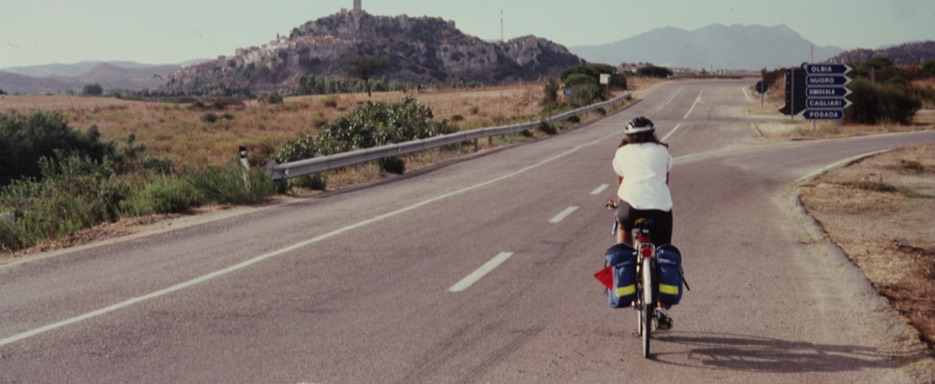
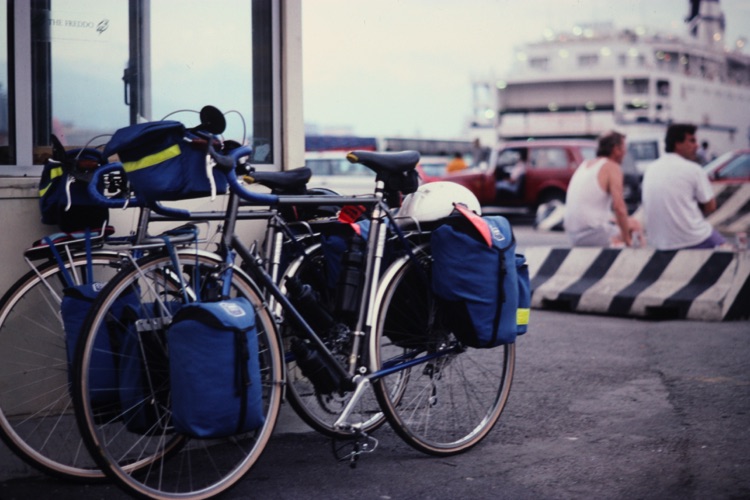
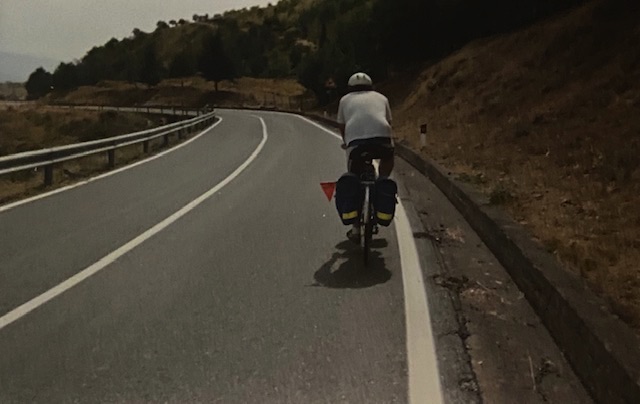
My third cycling journey across Europe was unlike any I had done before. Once again, fully self-sufficient and with the same travel companion, but with a completely new rhythm: the freedom to discover the Mediterranean slowly, savoring every island, every port, every stretch of coastline.
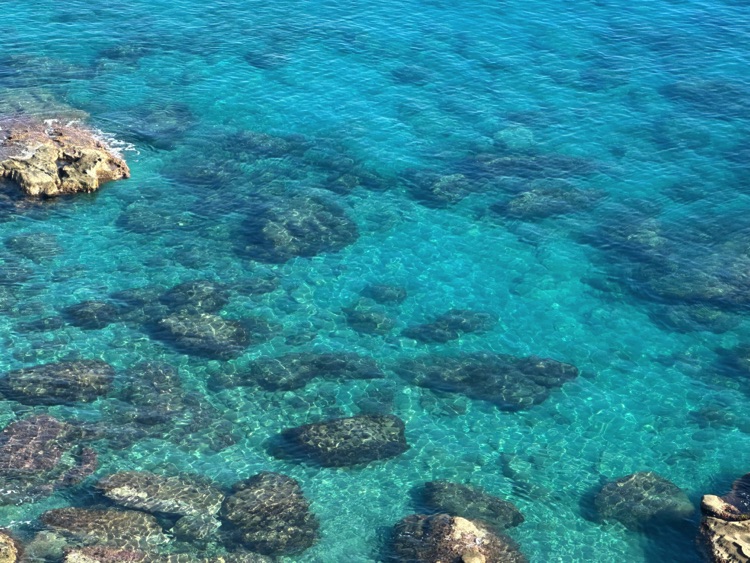
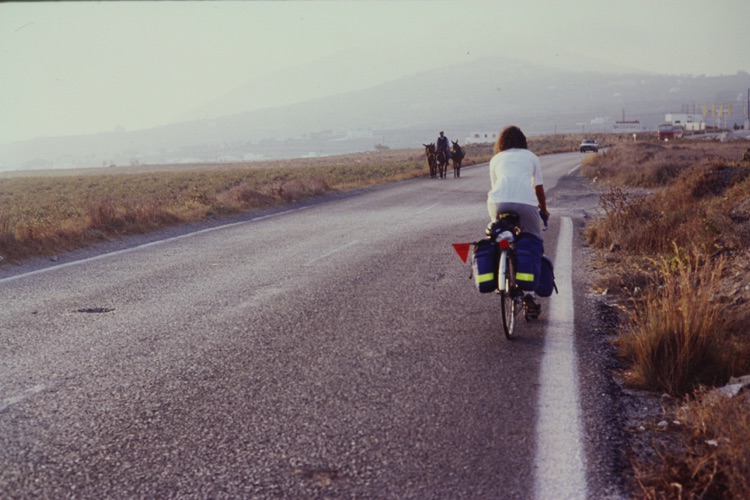
We pedaled among luminous islands and crystal-clear seas, traversing ever-changing terrain: paved roads along the coast, dirt paths through olive groves, steep climbs between villages, and sun-drenched plains stretching to the horizon.
We alternated between the two modes of travel we love most: wheels on the road and the wind on our faces during ferry crossings. About 2,640 kilometers carried us through Italy, France, Corsica, Sardinia, Sicily, Calabria, Basilicata, Puglia, and Greece, passing through vibrant cities, historic villages, peaceful hamlets, and untouched natural landscapes.
Each day brought a new story. The scent of the sea, the sound of bells in a small mountain village, the sight of sun-kissed olive groves and vineyards small details that remain etched in memory.
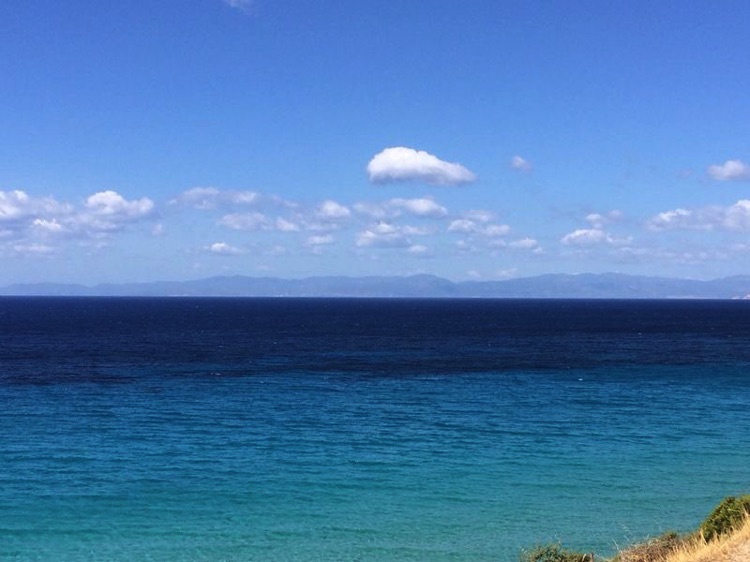
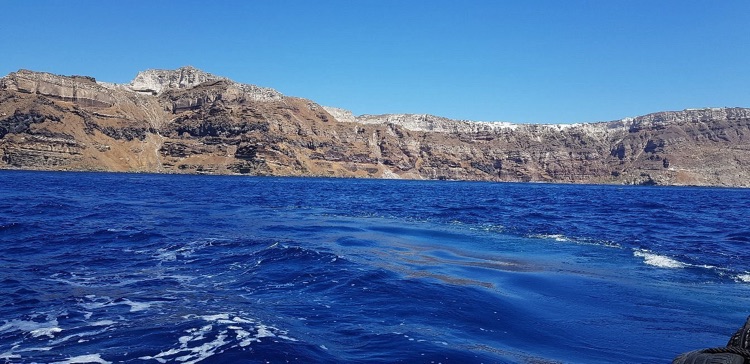
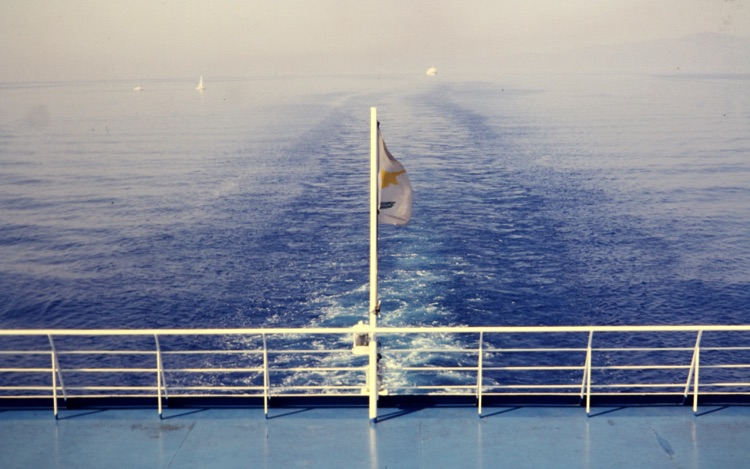
The waters of the Ligurian, Tyrrhenian, Ionian, Adriatic, and Aegean Seas accompanied us throughout the journey, each with its own rhythm, colors, and light. Every ferry crossing became a moving balcony over the Mediterranean, revealing hidden cliffs, secret bays, and islands that can truly be appreciated only from the sea.
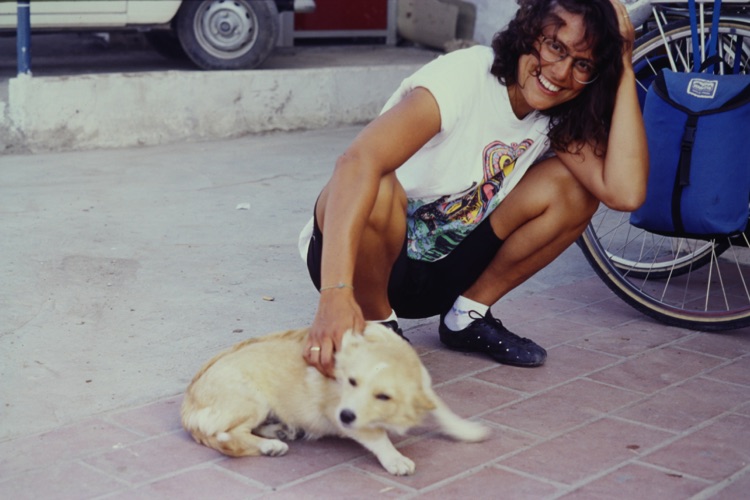
This journey was a continuous discovery, a hymn to freedom and adventure. A unique blend of bicycle, sea, and land—unpredictable and astonishing that made every kilometer a small gift: the pure joy of traveling on two wheels, unhurried, with an open heart and eyes always ready to capture the beauty of the world.
Departure from Italy 🇮🇹 and journey through the north, inland, and south of Corsica 🇫🇷
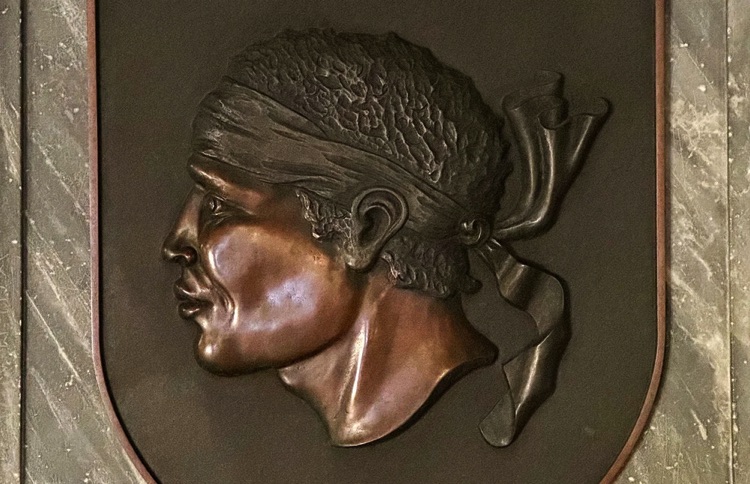
Napoleon Bonaparte, the famous French general and emperor, born in Corsica, reminds us how the island’s history has influenced Europe and the world.
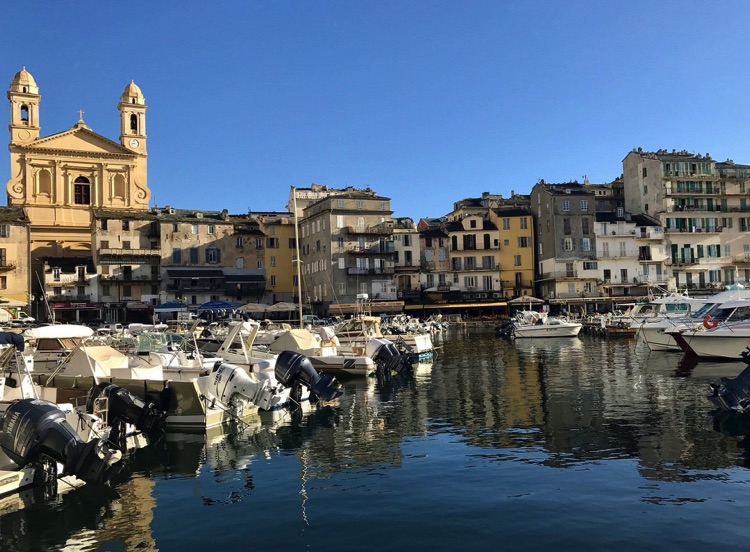
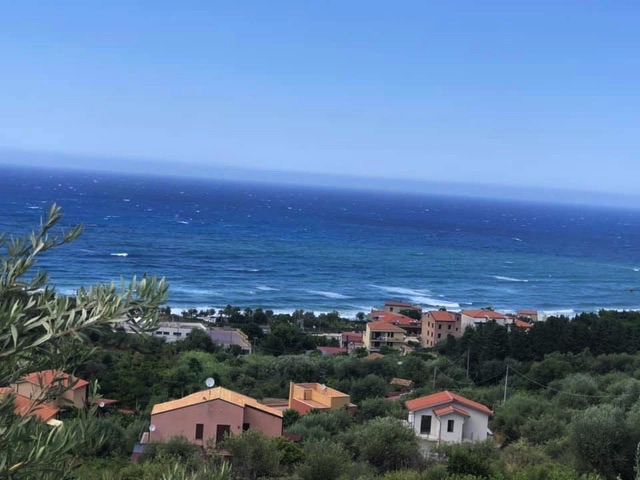
With its clear, crystalline waters, Corsica is a small, unspoiled paradise in French waters, enchanting with its historic towns, wild and lush nature, and mountainous inland. Bastia welcomes us as the gateway to the island, with its ancient port and streets climbing among ochre-colored stone buildings. With the bags loaded on our bicycles, we start pedaling toward the inland, crossing mountain landscapes and perched villages.
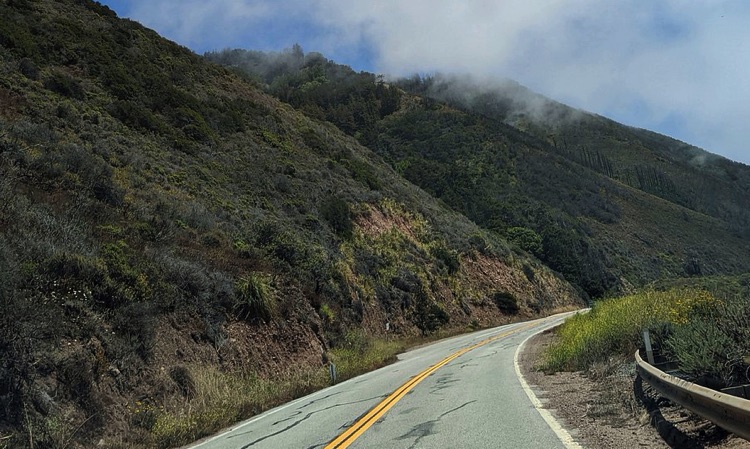
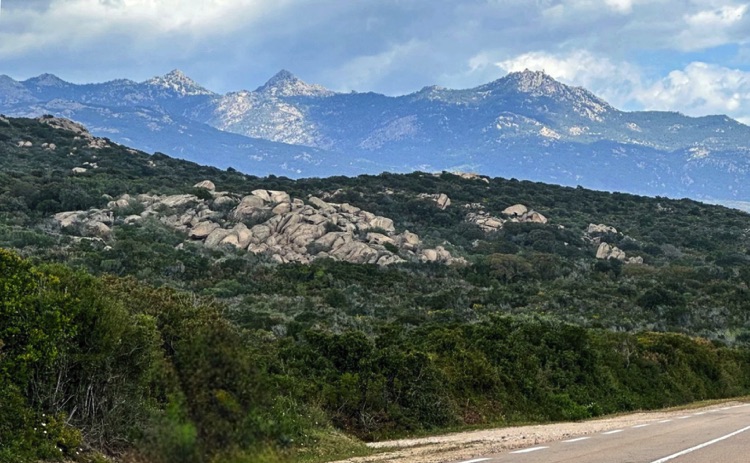
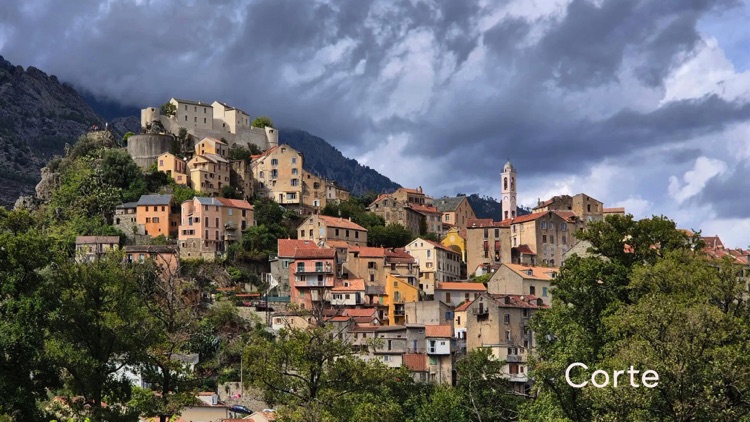
Deserted roads lead us to Corte, the ancient capital under Pasquale Paoli, perched in the heart of the mountains and surrounded by breathtaking panoramas: deep valleys, sharp peaks, and colors shifting with the changing light. Cycling here means feeling the authentic breath of Corsica, between climbs and descents that alternate softness and strength, through landscapes sculpted by wind and time.
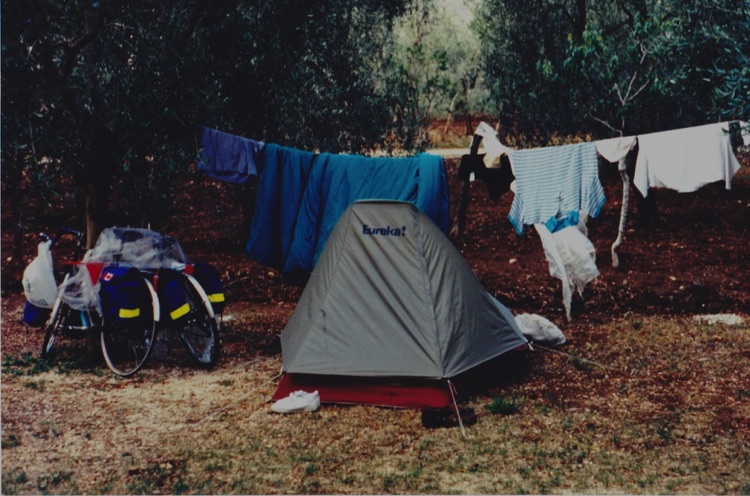
Continuing toward the eastern coast, we arrive at Aleria, a small jewel suspended between sea and land. Fine sandy beaches, turquoise waters, and intense contrasts of light accompany us along every curve. Here, time seems to slow down, and a night camping ⛺ grants us the island’s silence, broken only by the wind and the call of the sea.
The ride continues along the coast: Gisonaccia, Travo, Solenzara, and Ste Lucie pass under our wheels through seaside towns in vivid colors, where blue sky and crystal-clear sea seem to merge on the horizon.
Porto Vecchio finally appears as a hilltop village, with ancient fortifications 🏘️ and picturesque alleys, and the famous beaches of Palombaggia and Santa Giulia that seem painted. We stroll through the town center, breathe in the sea breeze, and prepare for the final stretch south.
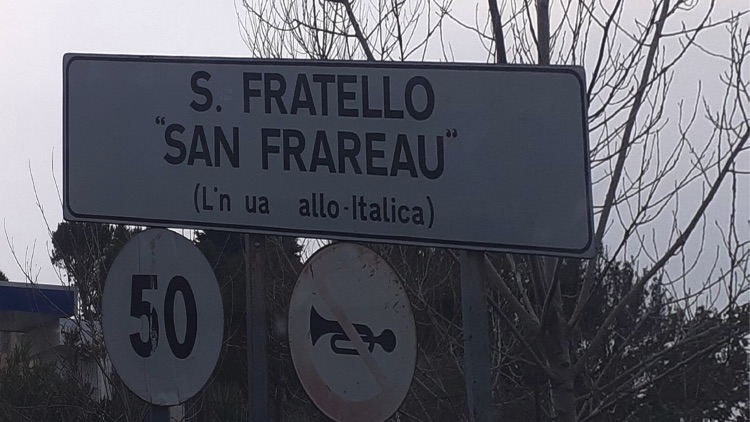
From Porto Vecchio, in about 27 km, our bicycles take us to Bonifacio, at the southern tip of the island. The white cliffs plunging into the sea and the narrow streets of the historic center leave us breathless, while we notice many signs still bearing the Italian name “Corsica” and meet locals bilingual in French and Italian a small cultural bridge that brings the island even closer.
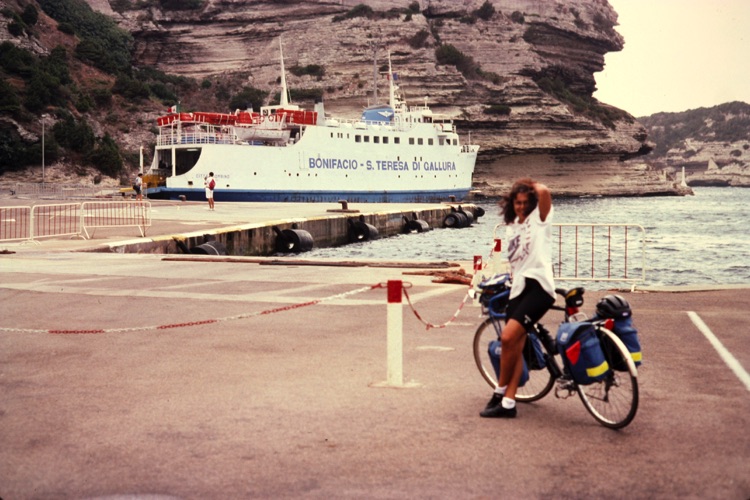
From Bonifacio, with our hearts still suspended between sea and mountains, we board the ferry ⛴️ to Santa Teresa di Gallura, in Sardinia, 🇮🇹 ready to discover a new corner of the Mediterranean and continue our adventure on two wheels.

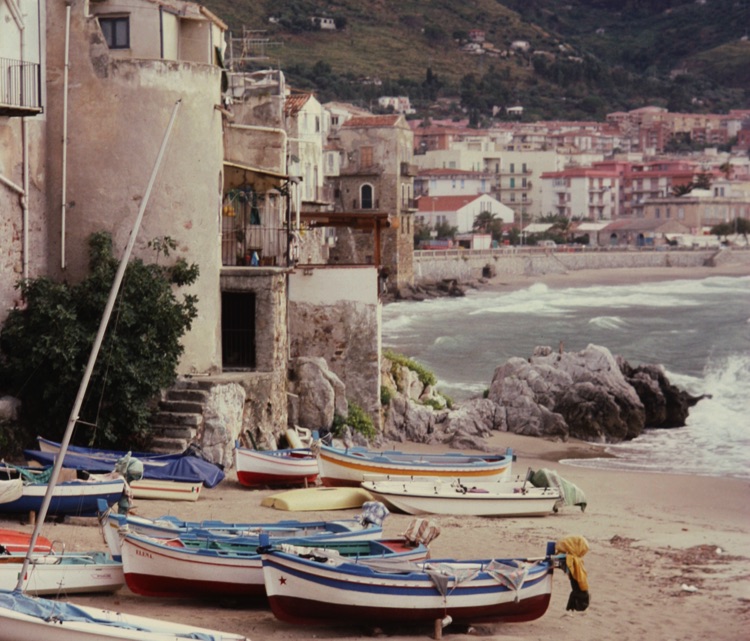
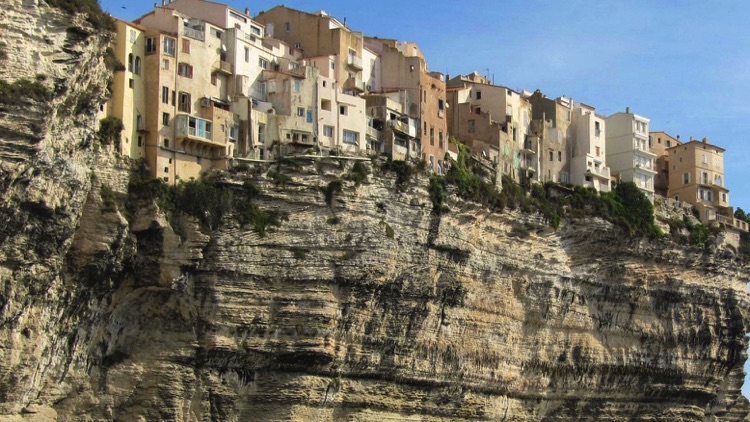
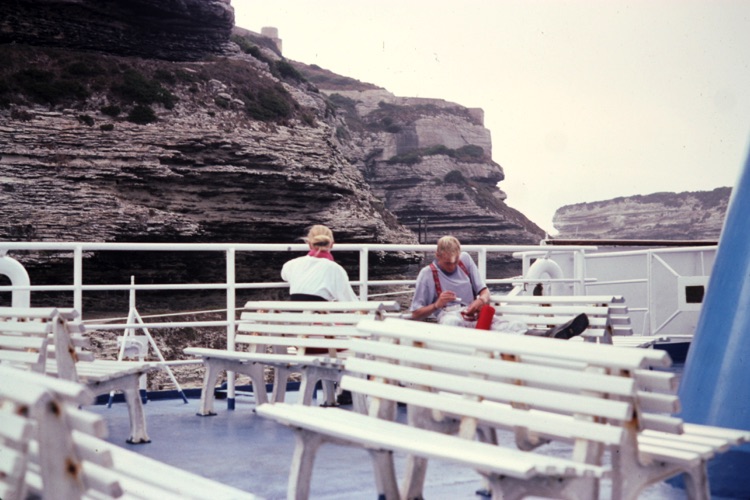
Leaving Corsica 🇫🇷, discovering Sardinia 🇮🇹 : Pedaling between sea and mountains
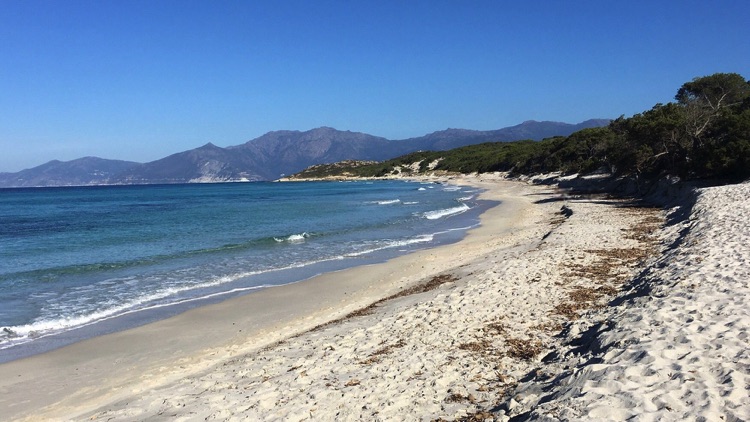
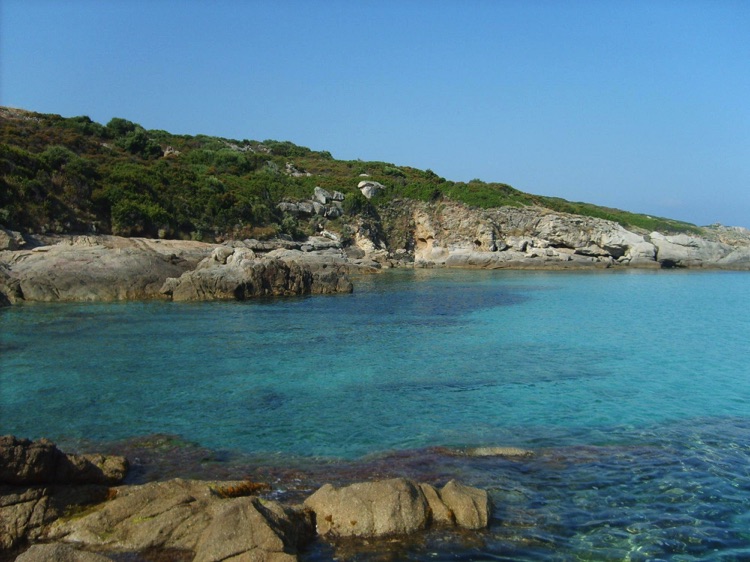
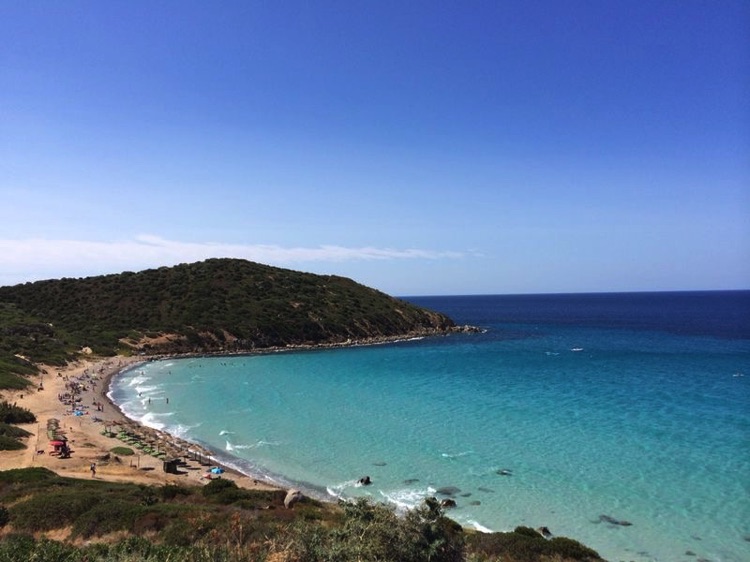
Leaving Corsica, a French island suspended between sea and mountains, we head toward Sardinia, ready to explore the island from north to south and inland, through breathtaking landscapes, hidden corners, and a sea that is always stunning, accompanied by pristine beaches.
After the short ferry from Bonifacio, we arrive at Santa Teresa di Gallura, at the northern tip of Sardinia, with our bicycles already loaded with bags: the adventure continues amid the scent of the sea and the intense Mediterranean light.
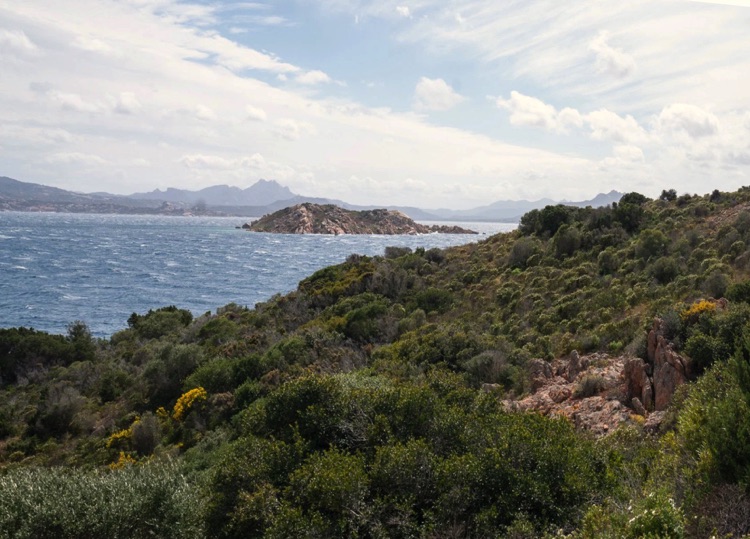
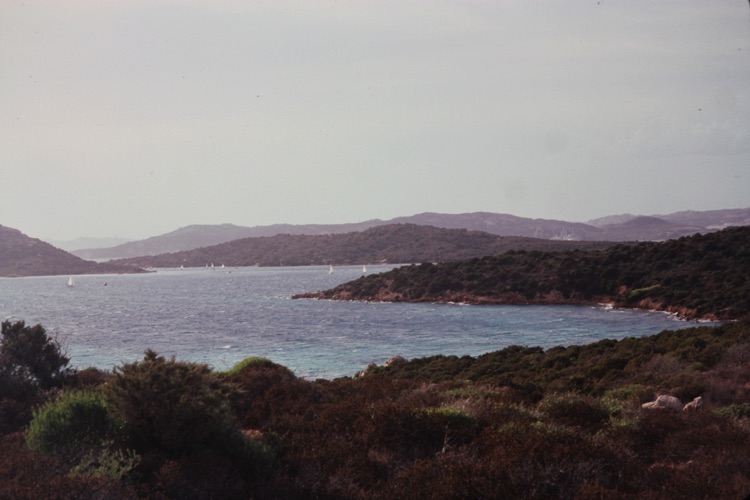
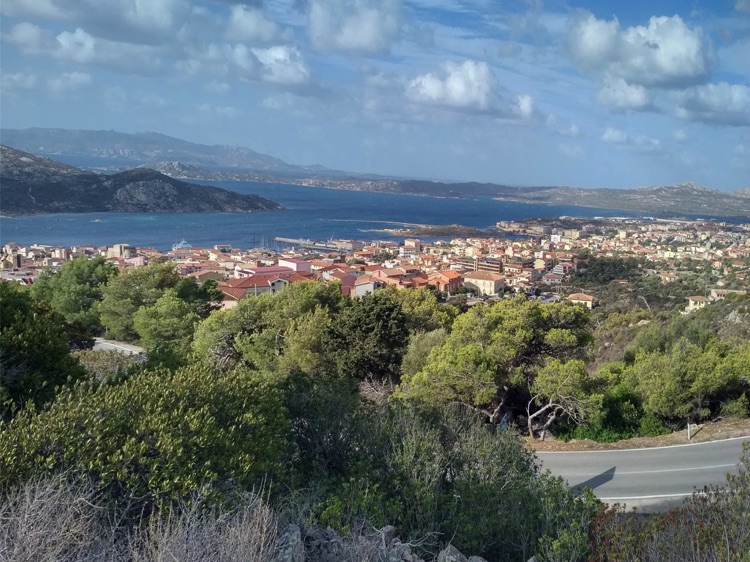
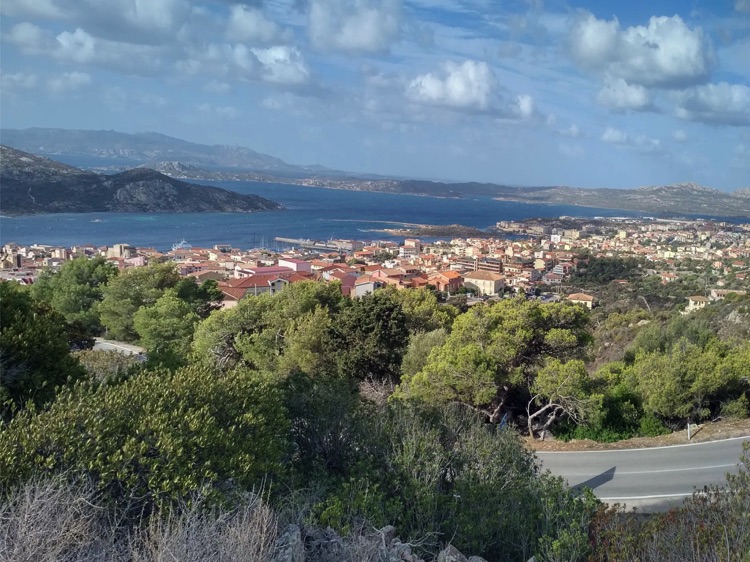
Pedaling along the northwest coast, we pass the picturesque fishing village of Porto Pozzo, then Palau, from where we take a brief 15-minute ferry to La Maddalena Island, the largest in the homonymous archipelago.
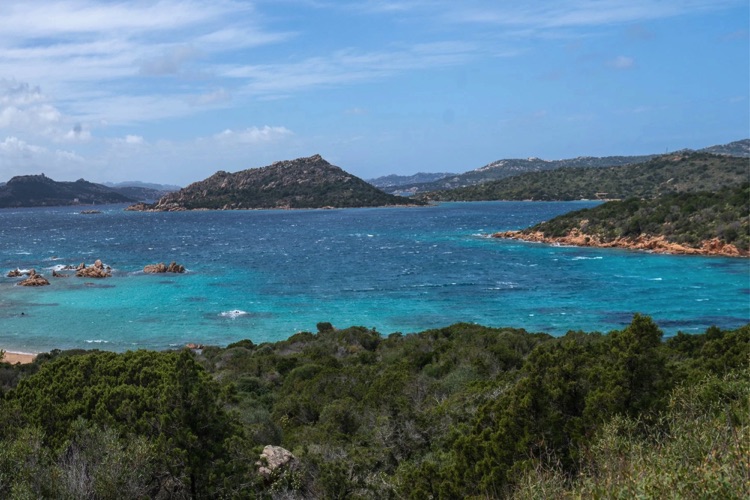
La Maddalena welcomes us with its beaches nestled among pink granite, its National Park, and a relaxed atmosphere. Riding along its coastal streets, we notice the presence of American sailors the naval base is still active and are enchanted by the colors of the water changing around every corner.
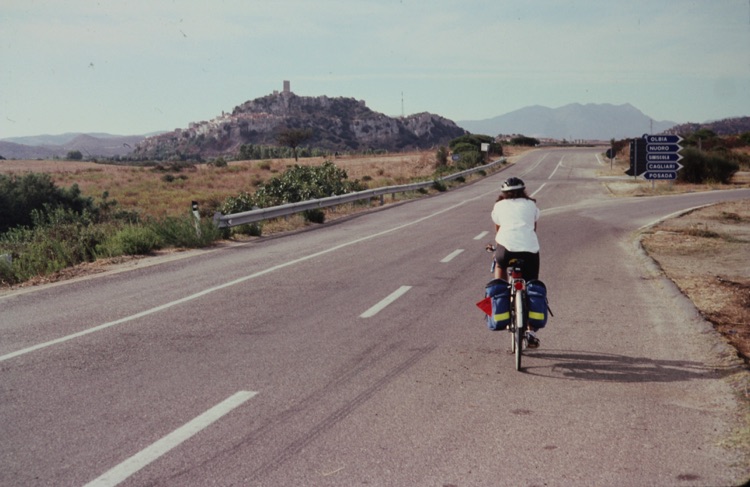
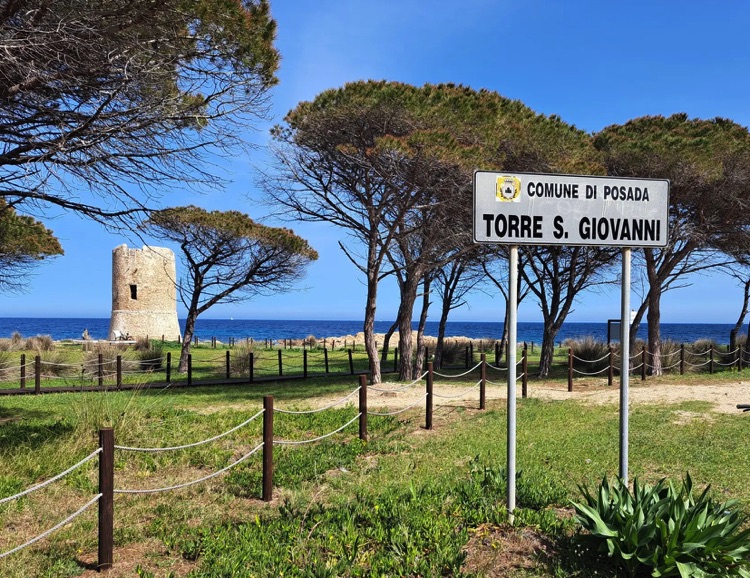
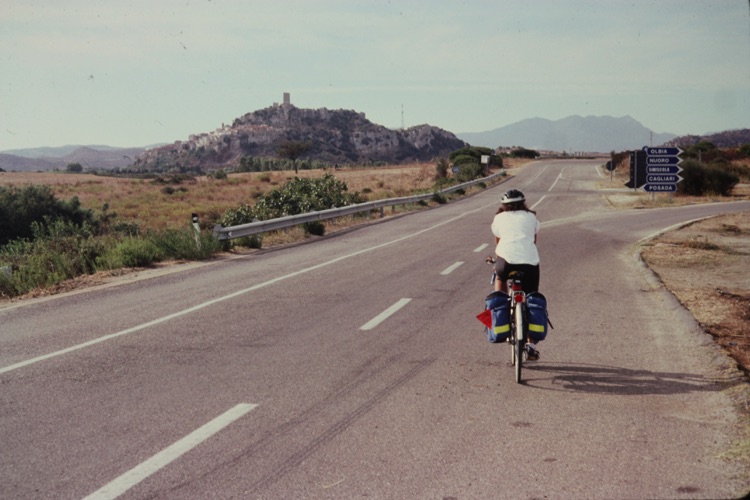
Back in Palau, we resume our journey south: Olbia, Porto San Paolo, Monte Petrosu, Budoni, Posada, Siniscola, and Santa Lucia follow like pearls along the eastern coastline. The road, however, does not always follow the coast: to visit the beaches of the Costa Smeralda we often have to detour, zigzagging between bays and headlands. This route can feel a bit repetitive for those, like us, seeking the most authentic and less touristy Sardinia.
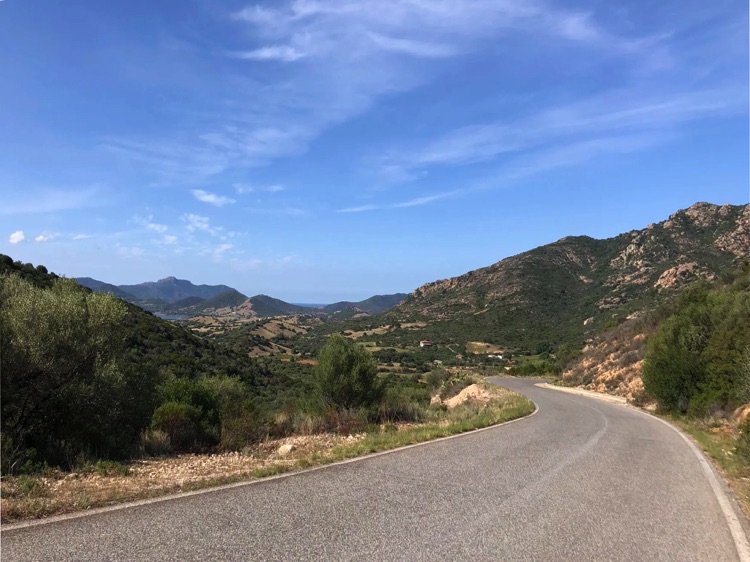
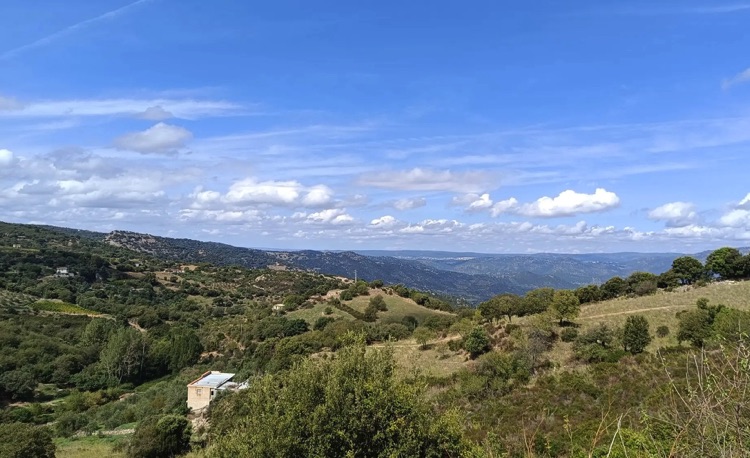
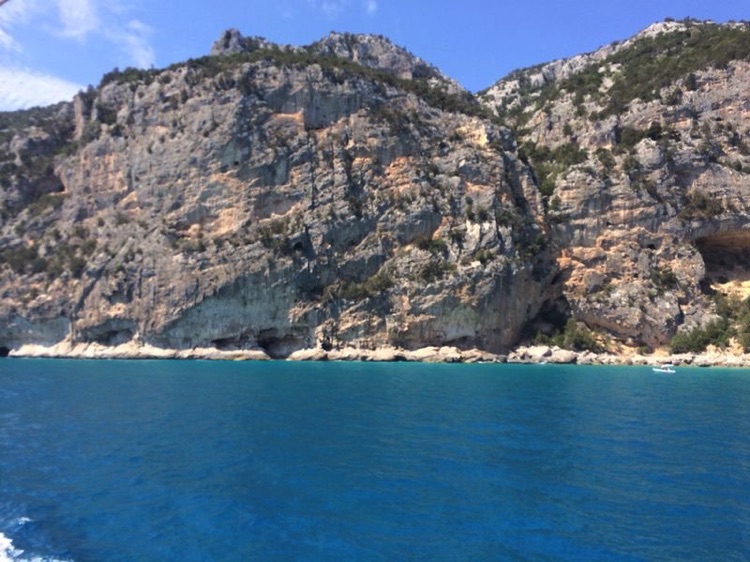
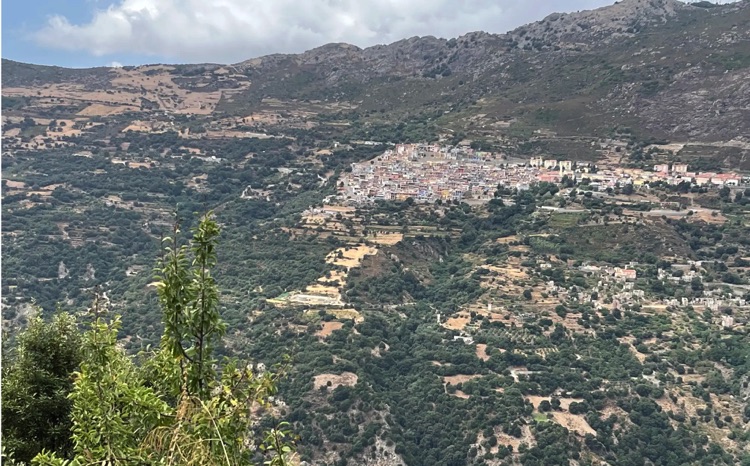
We therefore chose to explore the island’s interior, where the landscape changes rapidly: forests of holm oaks, solitary valleys, and mountains rising toward the sky.
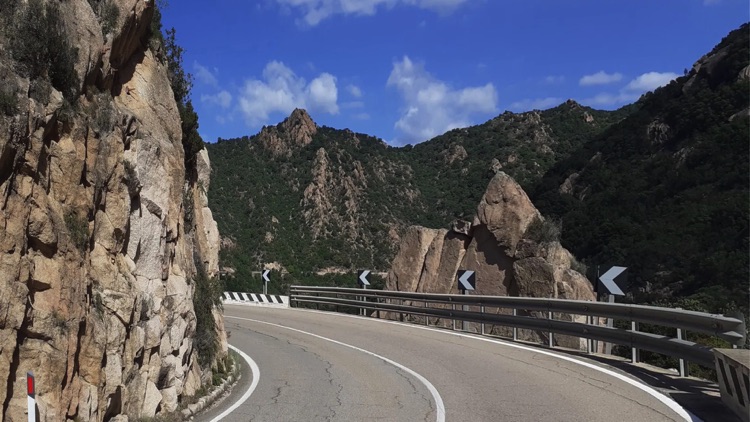
We pass Orosei and Dorgali, climbing up to Passo di Genna Silana (1,100 m), where the air becomes cooler and the views open toward the sea. From here, the descent toward Jerzu and Muravera alternates climbs and curves, amid the scents of Mediterranean scrub and absolute silence.
The roads, sometimes tough and challenging, eventually lead us toward the coastal plain and the southern light. Cagliari welcomes us with its golden light and the scent of the sea. After so many kilometers through mountains and lonely roads, arriving here feels like stepping into a mosaic of Mediterranean history and life.
We pedal through the bustling port, the narrow streets of the Castello district, and the panoramic terraces of Bastione Saint Remy, from which the entire city and surrounding sea can be admired. The pastel-colored façades, the call of seagulls, and the warm wind from the sea create an atmosphere that is lively and relaxed at the same time.
In cafés and shops, one can feel the island’s slow rhythm, among scents of spices and traditional sweets, and the serene looks of people living in harmony with the sea.
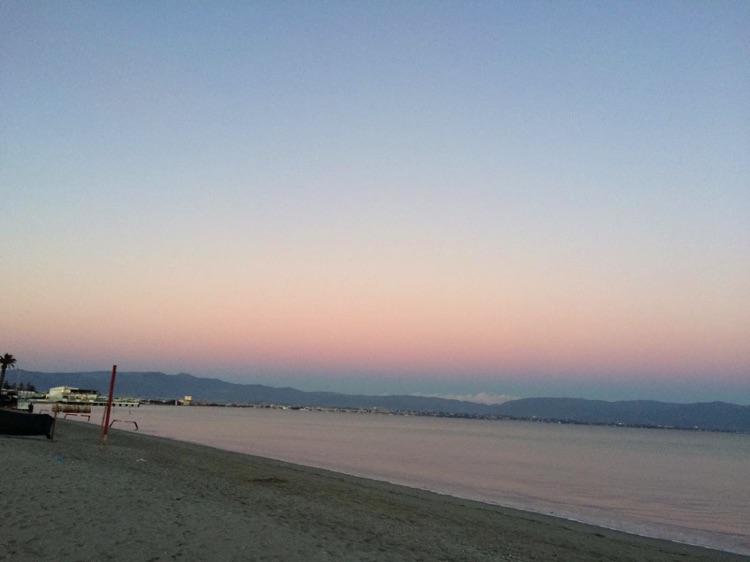
Cagliari is an ideal bridge between sea and land, past and present a place where every street tells a story, and every sunset reflects on the water in shades of copper and gold.
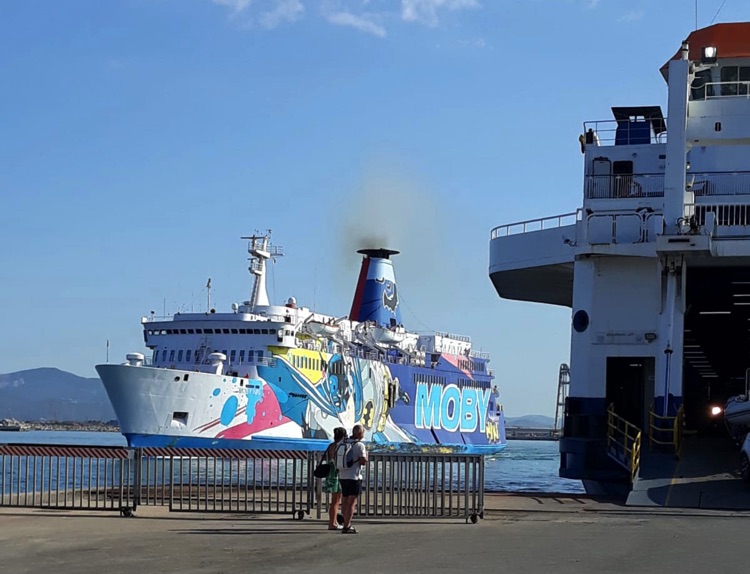
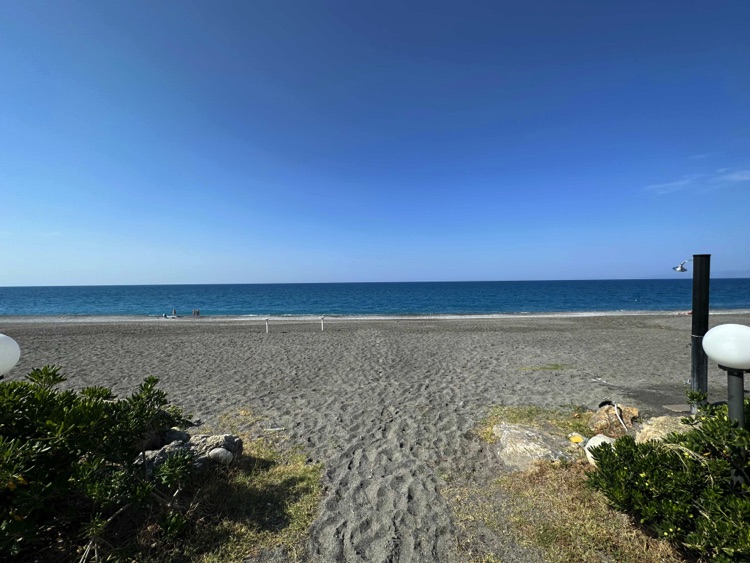
In the evening, as we approach the port to board the night ferry ⛴ to Trapani, the horizon turns red and the sea calms. The crossing to Sicily will be our new Mediterranean chapter, but we leave Sardinia with the feeling of having captured its most authentic soul wild, bright, and free.
Route Details
• Start & Finish 📍: Milan, Italy 🇮🇹
• Dates:: September 10 – October 14
• Total Distancee 🚴: 2.640 km
• Duration: 20 days, with no rest days (ferry days counted as rest)
• Type of Route Self-supported bike tour, multi-country
• Countries Crossed::Italy 🇮🇹, France 🇫🇷, Greece 🇬🇷
• Areas Explored:
◦ Italy (including Corsica 🇫🇷, Sardinia 🇮🇹, Sicily 🇮🇹, Calabria, Basilicata, Puglia)
◦ Greece 🇬🇷 (mainland and the islands of Paros and Santorini)
Ferry Crossings & Seas Crossed
• 🇮🇹 Genoa → Bastia (Corsica, France, island) – Ligurian Sea ⛴️
• 🇫🇷 Bonifacio → Sardinia (Italy, island) – Tyrrhenian Sea ⛴️
• 🇮🇹 Cagliari → Sicily (Italy, island) – Tyrrhenian Sea / Mediterranean ⛴️
• 🇬🇷 Brindisi → Patras (Greece, mainland) – Ionian Sea ⛴️
• 🇬🇷 Brindisi → Patras (Greece, mainland) – Adriatic Sea ⛴️
Major Mountain Passes
• Genna Silvana Pass, Sardinia (1,100 m) – Scenic pass through gentle hills and mountains, with quiet roads and stunning views of the Sardinian countryside.
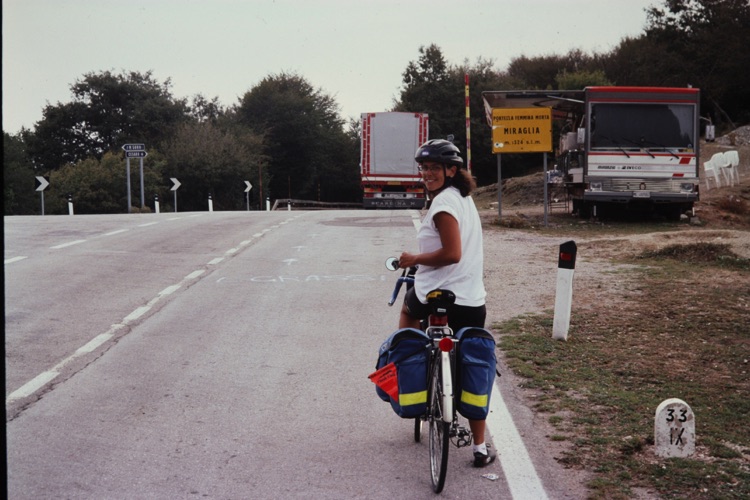
• Portella Femmina Morta, Sicily (1,524 m) – Challenging pass with steady climbs, offering breathtaking views of Sicilian mountains and the nearby coast.
Additional Information
• Route Map 📍: View Map - Coming Soon
• Complete Map 📍: Full map of my cycling journeys across Europe
• Photo Gallery 📍: Click on the images to view them in larger format
The Journey Begins
Departure from Italy 🇮🇹 and Travel Across Northern, Inland, and Southern Corsica 🇫🇷
From the heart of Lombardy in central Milan, at Piazza Duomo, to the deep blue of the Mediterranean, through golden plains, gentle hills, and the promise of the sea. We start from Milan, leaving behind the lively city and its frantic pace.
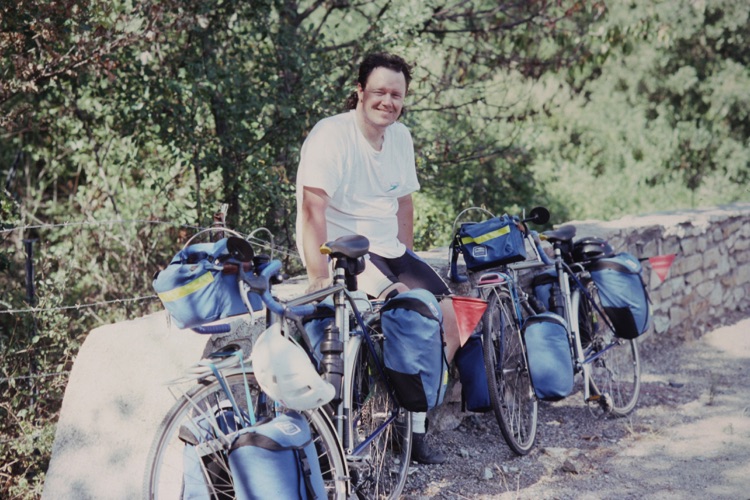
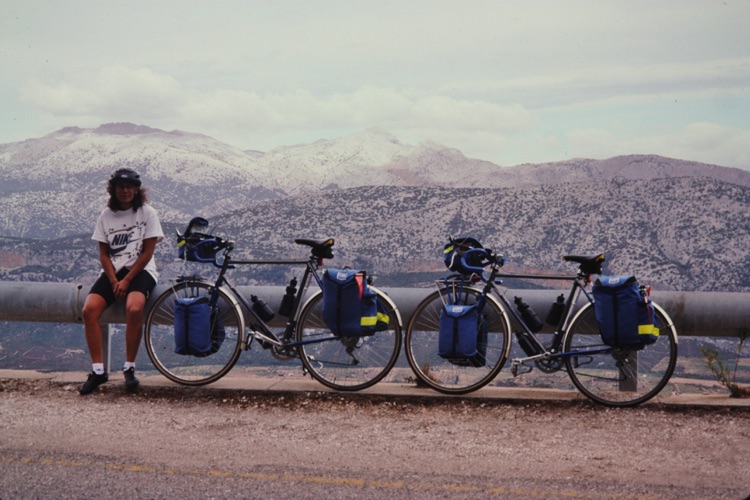
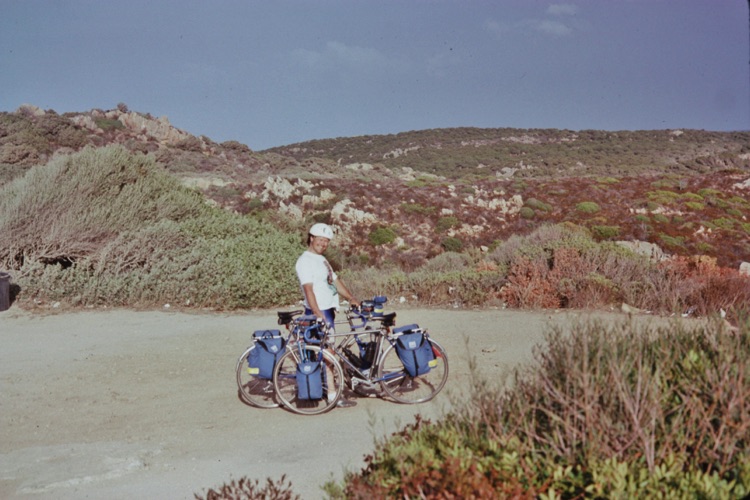
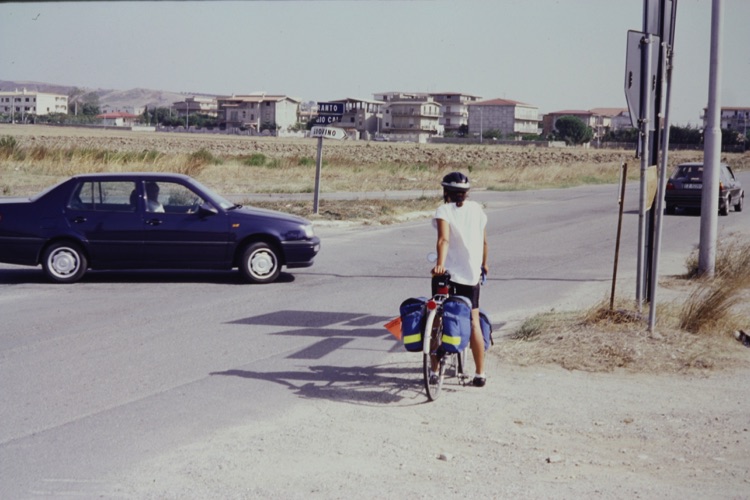
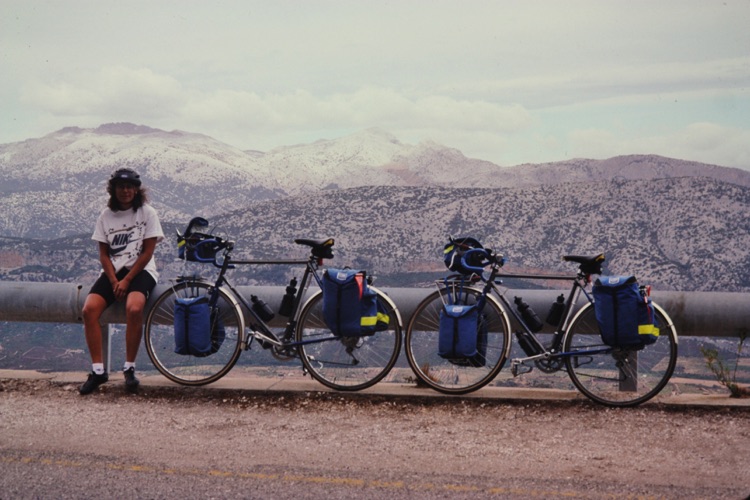
It’s a sunny, mild day, with a light breeze accompanying us and the morning scents blending with the sound of wheels on the asphalt. The bicycles are loaded: each bag on the frame tells the story of autonomy and freedom for this journey.
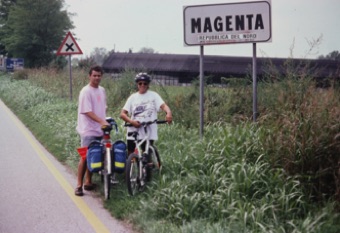
We pedal through Rho, Pregnana Milanese, Mantegazza, Vanzago, Arluno, and Ossona, reaching Magenta, where the flat roads and smooth traffic let us find the rhythm of the ride. My brother Claudio joins me on this first stretch, sharing hidden glimpses and stories of towns waking between squares and historic buildings.
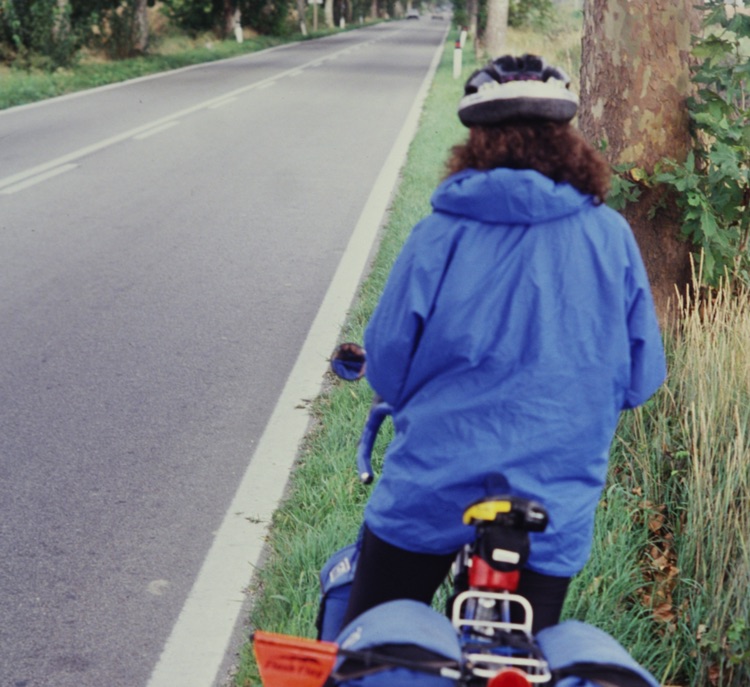
We cross Abbiategrasso, Vigevano, and Gambolò, feeling the ground shift slightly beneath the wheels, passing through Tromello, Scaldasole, and Sannazzaro de’ Burgondi. The countryside opens into golden and green fields, with the sun playing among rows of poplars and crops of corn and sugar beet, while a few banana plants add an exotic touch to the landscape.
The small Piedmontese roads lead us through Corana, Molino dei Torti, and Castelnuovo Scrivia, until we reach the great Po River, where the reflection of the water seems to stop time for a moment a call to breathe and enjoy the present.
As we approach Tortona, the hills begin to make themselves felt, but the climbs are gentle, a prelude to the rolling terrain that will accompany us towards Genoa. The city rises before us with its lively port and the palpable history in its streets, from the memory of jeans born here five centuries ago to the pulse of Mediterranean life between ships and markets.
We board the ferry ⛴️ in Genoa, leaving Italy ⛴️ behind, while the sea wraps around us and carries us towards Bastia, the gateway to Corsica 🇫🇷. The sparkling waters, jagged coastlines, and mountains rising from the sea welcome us to an island that seems suspended between land and sky.
Every turn of the ferry reveals a new landscape: hidden coves, perched villages, and white sand beaches. The salty airand the bright Corsican light make us realize that this journey is truly a Mediterranean adventure filled with pedaling, wind, and absolute freedom.
Leaving Sardinia 🇮🇹, Discovering Sicily 🇮🇹 : Cycling Between Fire, Sea, and History
Leaving Sardinia, an island suspended between sea and mountains, we set our course for Sicily, ready to explore the largest island in the Mediterranean, rich in history, breathtaking landscapes, and unique traditions.
The ferry from Cagliari (Sardinia) to Trapani (Sicily) ⛴️ usually takes about 11 hours and 30 minutes, giving us time to rest and prepare our bikes for the new rides awaiting us on the island.
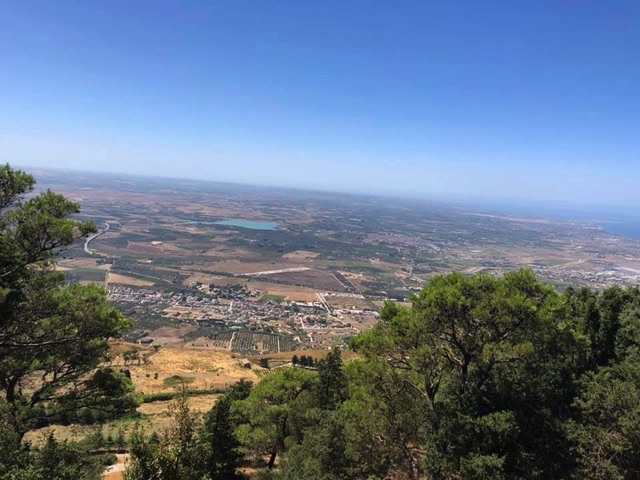
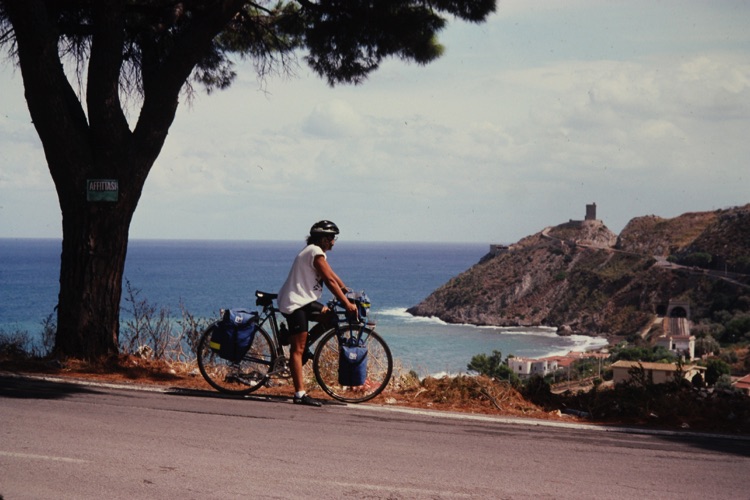
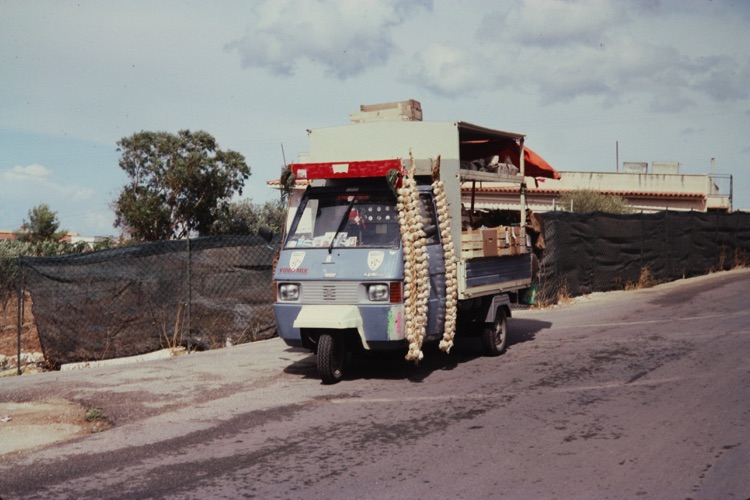
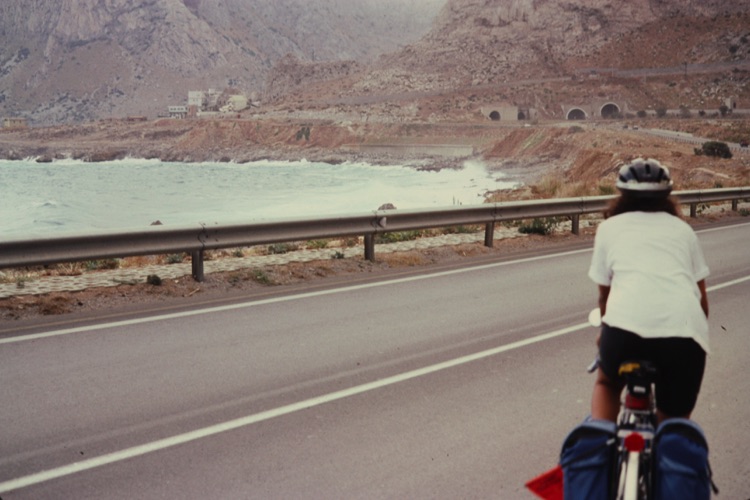
Upon arrival, Sicily welcomes us with its golden sandy beaches, pebble-lined coasts shaped by the sea, and roads that alternate gentle climbs, panoramic switchbacks, and inland routes through rolling hills and olive groves. Every kilometer brings new scents and colors, and the feeling of crossing an island that constantly changes its face.
Famous for its extraordinarily rich cultural heritage, Sicily preserves traces of Ancient Greece, majestic temples, and Baroque cities glowing under the southern sun.
Towering over the island, Mount Etna rises like a millennia-old guardian the highest active volcano in Europe and a powerful symbol of strength and transformation. On its slopes, among lava flows and chestnut forests, it is even possible to ski in winter a truly unique experience in the heart of the Mediterranean.
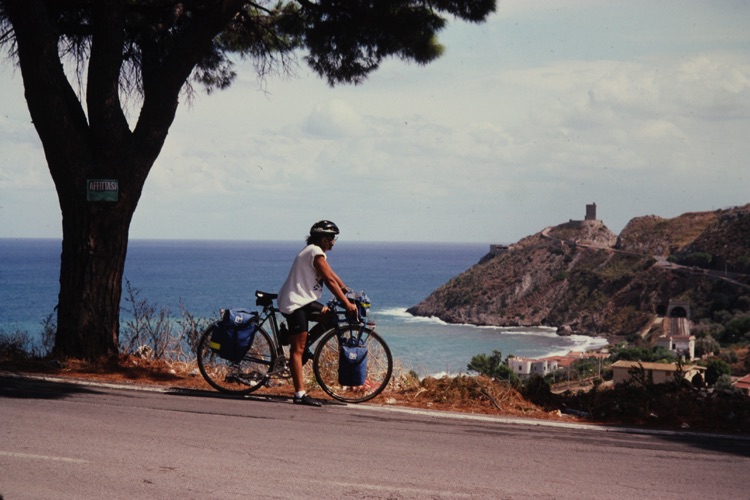
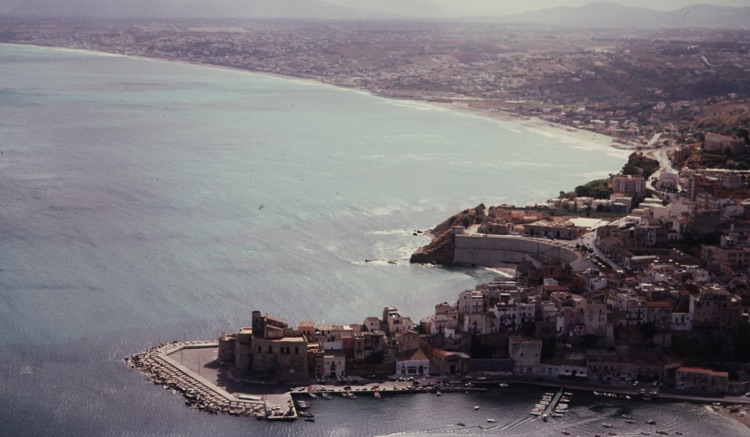
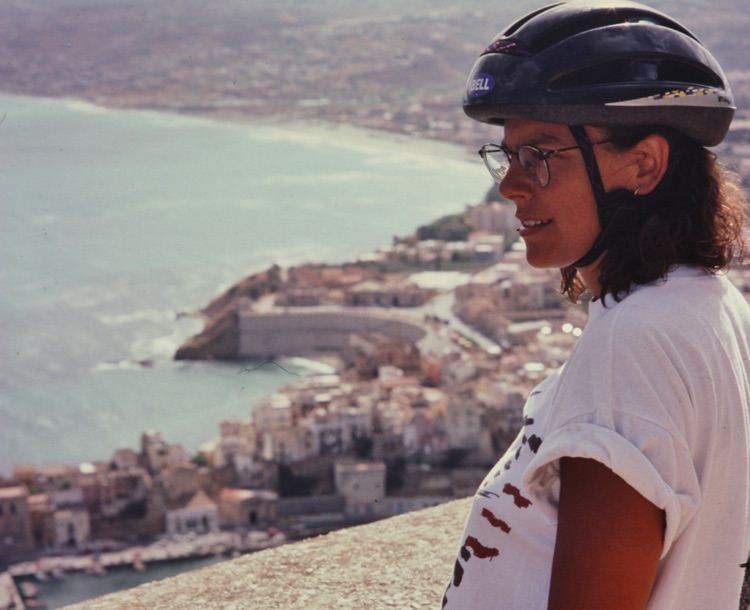
From Trapani, we ride toward Castellammare del Golfo, following the coast and passing through charming seaside towns until reaching Palermo.
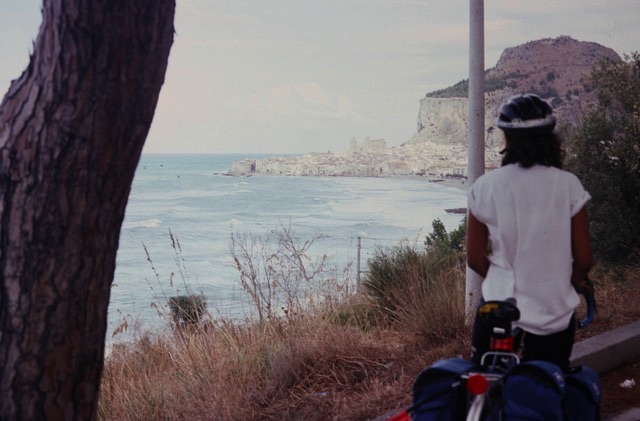
We then continue to Cefalù, a seaside village with golden beaches and historic alleyways, before riding along the coast through Finale, Castel di Tusa, Santo Stefano di Camastra, and Marina di Caronia, eventually arriving in Acquedolci the starting point of the climb toward Monte San Fratello (675 m), in the heart of the Nebrodi Mountains.
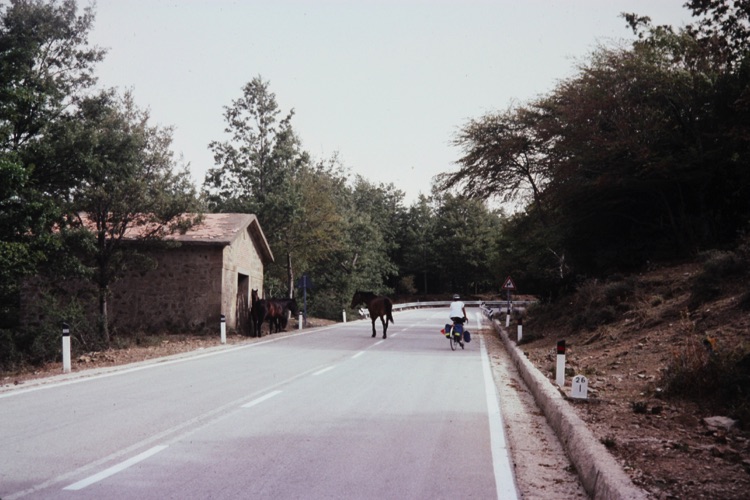
Among medieval villages and unspoiled natural landscapes, we encounter the Sanfratellano horses, running freely alongside the road and adding a magical touch to the ride. San Fratello, with its ancient traditions and stories linked to famous families such as the paternal grandparents of Al Pacino — welcomes us with breathtaking views.
The real challenge awaits at Portella Femmina Morta (1,524 m): a long, winding road immersed in lush vegetation, where effort and wonder blend together among spectacular views and wild horses. The descent leads us to Cesarò, and shortly after, we enter Etna Park, surrounded by lava fields, smoking craters, and lunar landscapes that remind us of nature’s immense power.
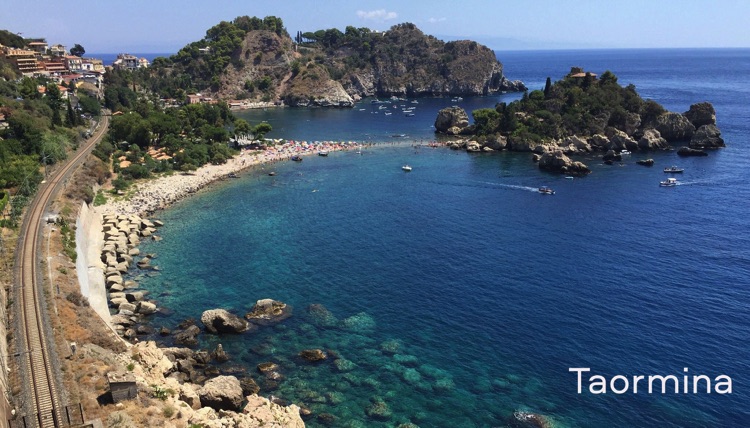
Along the Ionian coast, Taormina greets us with its unique charm: palm trees, banana plants, and alleyways suspended between sea and volcano.
We continue along scenic coastal roads, through stunning viewpoints and picturesque towns, until reaching Messina, a lively Mediterranean port and key connection point between island and mainland. From here, the journey carries us to Reggio Calabria, on the Calabrian coast, ready to open new horizons and new rides along the Mediterranean.
Leaving Sicily, discovering Calabria and Basilicata 🇮🇹: between two seas, coastlines, and the roots of Southern Italy
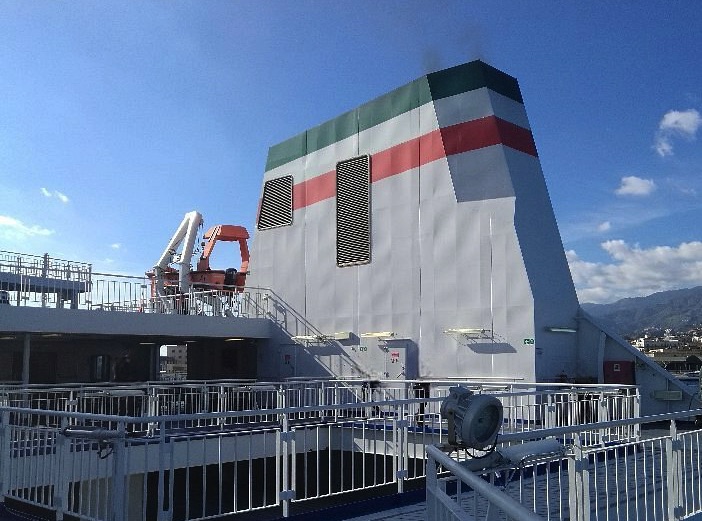
Leaving Sicily, we cross the Strait of Messina by ferry ⛴️. The crossing to Reggio Calabria takes around 30 minutes, a short journey in distance but rich in meaning a symbolic passage from island to mainland, surrounded by shifting currents, intense light, and views suspended between two lands so close, yet so different.
Arriving in Reggio Calabria, we are immediately immersed in Mediterranean landscapes. Calabria stretches southward, shaping the tip of the Italian “boot”, framed by the Tyrrhenian Sea to the west and the Ionian Sea to the east.
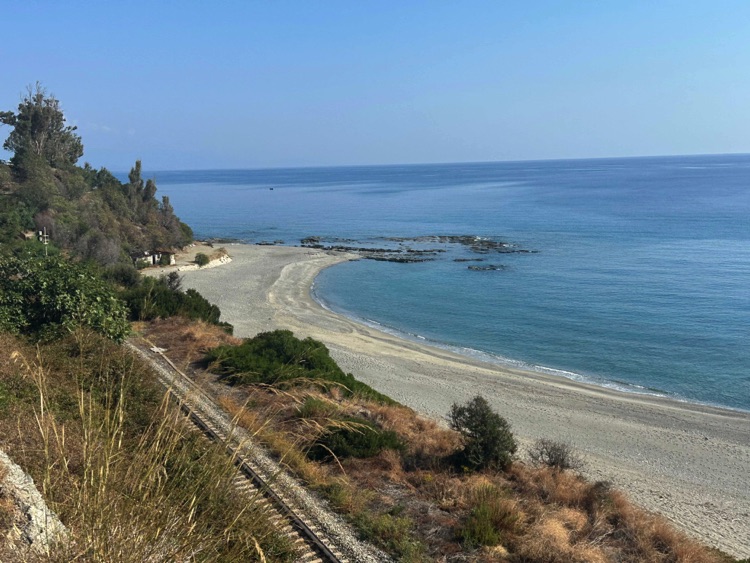
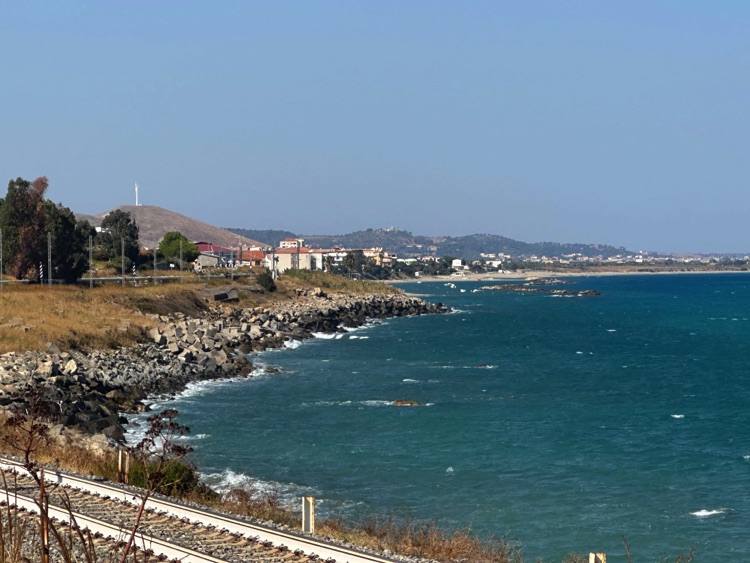
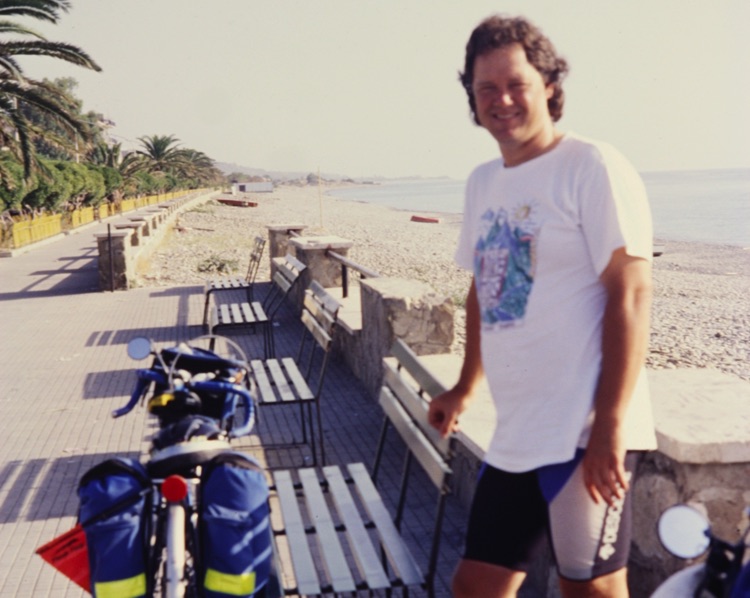
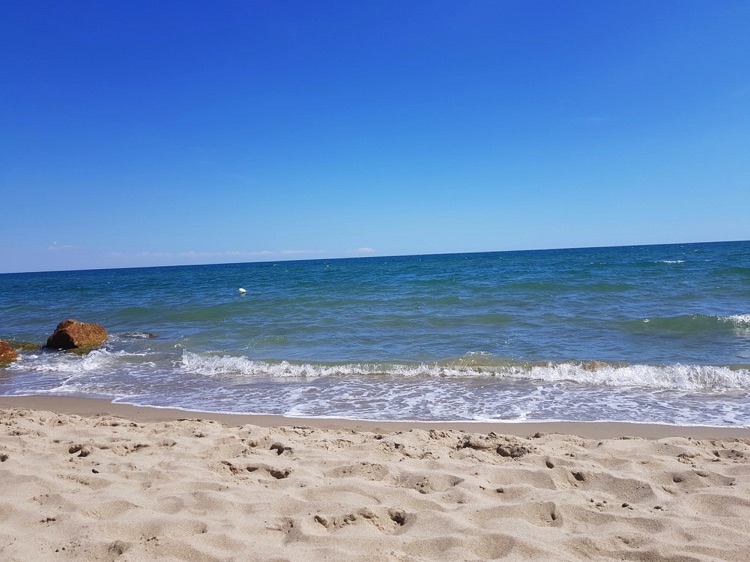
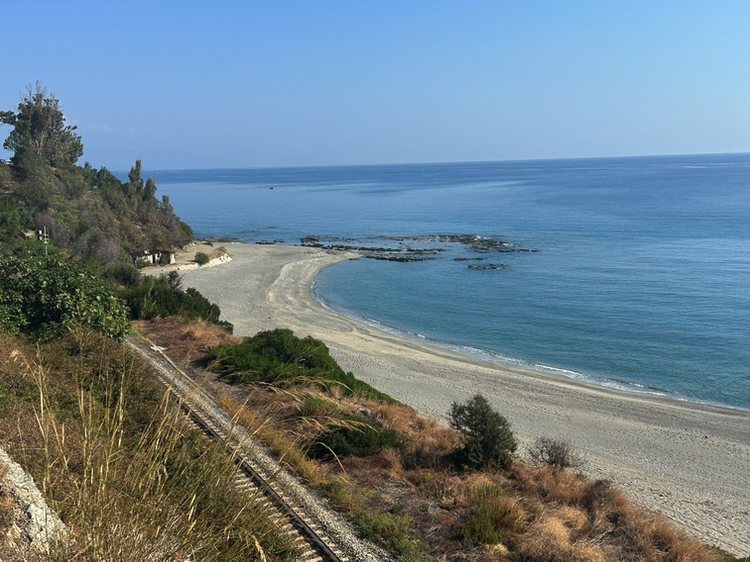
The Ionian coast of Calabria, starting from Reggio Calabria, first reveals wide sandy beaches, which gradually become rockier and more rugged as we ride north. Cycling along this coastline means alternating between long sandy stretchesand rocky sections, while behind us hills and mountains rise quickly, offering ever-changing perspectives.
We pass through picturesque coastal towns such as Melito di Porto Salvo, Bova Marina, Brancaleone, Bovalino, Locri, Siderno, and Monasterace, continuing on to Crotone, a port city overlooking the Ionian Sea, known for its beaches and the imposing Castle of Charles V.
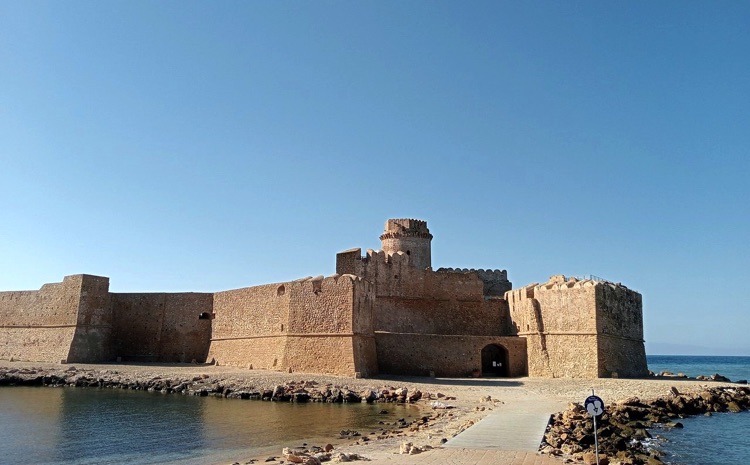
We then ride on toward Isola di Capo Rizzuto, famous for its crystal-clear watersand the Aragonese Castle, a silent witness to centuries of Mediterranean history. Coastal roads offer gentle descents toward the sea and flat stretches immersed in the light and scents of the Mediterranean maquis.
Continuing north, seaside towns such as Cirò Marina, Melissa, and Le Castella reveal evocative views of beaches, headlands, and villages suspended between sky and sea, where local traditions, culture, and nature blend seamlessly.
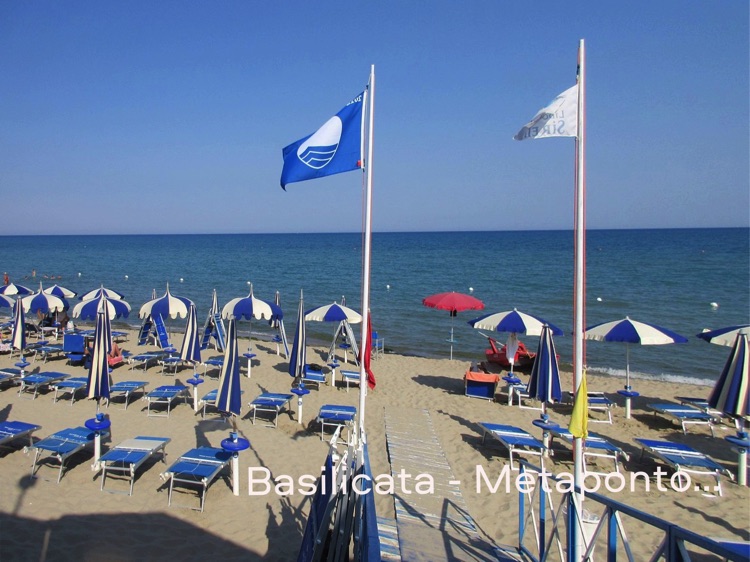
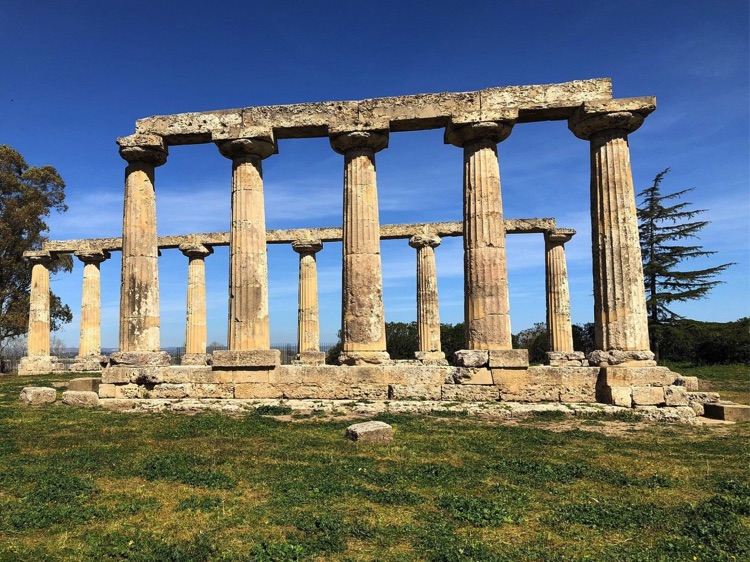
Crossing the regional border, Basilicata welcomes us with its short yet captivating coastline: golden beaches, clear waters, and small villages poised between land and sea. Metaponto, with its ancient Greek columns and archaeological remains overlooking the water, captures both the eye and the imagination, transporting us into an atmosphere suspended between past and present.
Among ancient ruins, centuries-old olive groves, and endless horizons, cycling here becomes a journey through nature, history, and Mediterranean culture, leaving an indelible memory with every kilometer ridden.
Leaving Basilicata, discovering Puglia 🇮🇹 : cycling along the Via Appia toward Brindisi
From Basilicata, we enter Puglia, following the ancient traces of the famous Via Appia, the “Queen of Roads,” built in 312 BC. Cycling over these old stones means crossing centuries: every village, farmhouse, and olive grove tells stories of farmers, merchants, and travelers from long ago. The rhythm of our wheels seems to blend with the memory of the road, giving a sense of continuity between past and present.
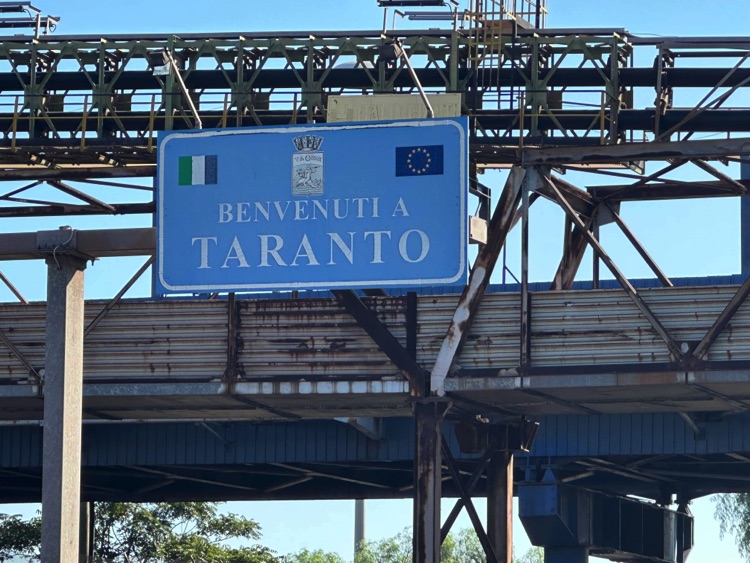
Along the Ionian coast, we encounter breathtaking landscapes and picturesque towns: Taranto, with its ancient port and deep blue waters, welcomes us amidst the slow movements of fishermen and the salty scent of the sea. Following the coastal roads, hidden corners and lively squares invite us to pause, savoring the authentic life of the South.
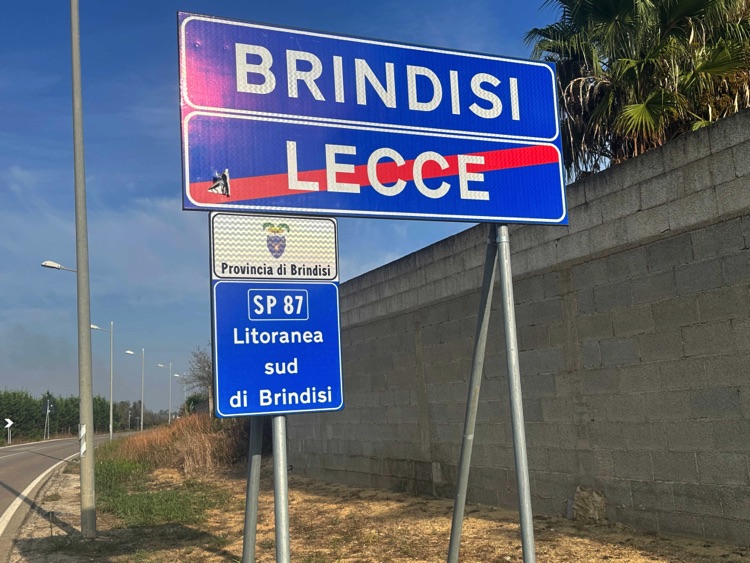
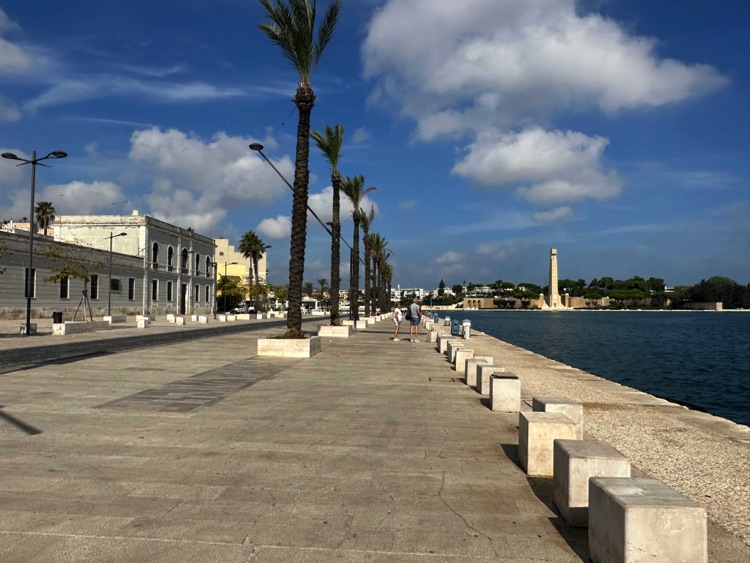
Upon reaching Brindisi, overlooking the southern Adriatic coast, we enjoy a ride along Lungomare Regina Margherita, a charming boulevard offering spectacular views of the harbor and the sea.
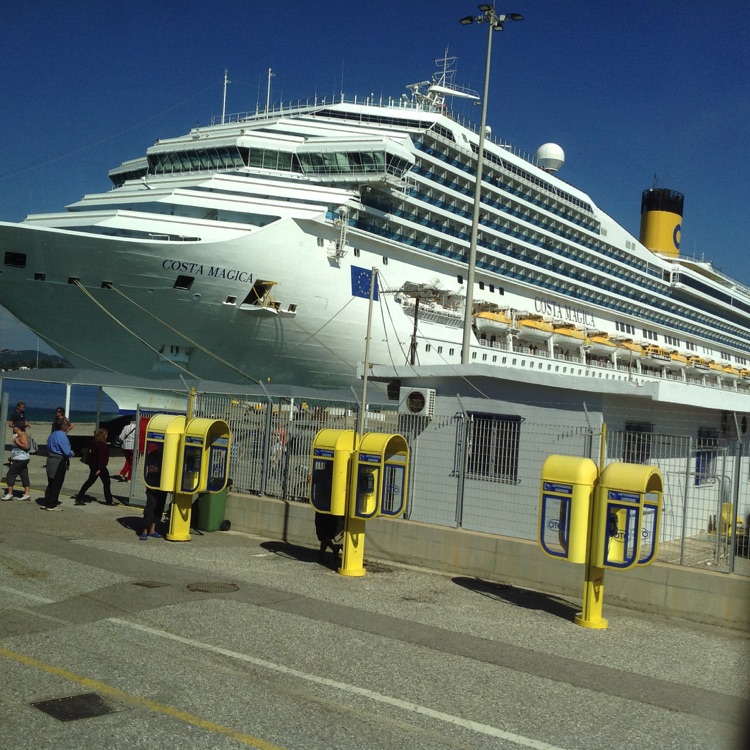
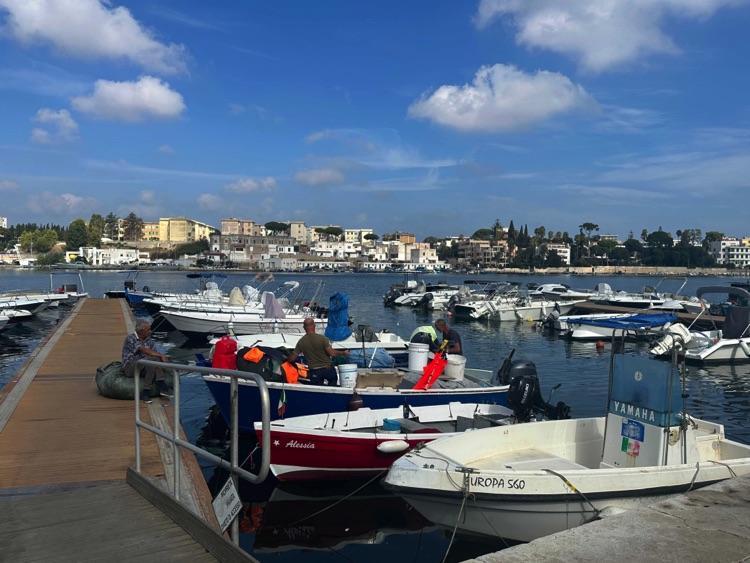
Continuing toward the port, we notice ferries ready to depart for various destinations and some cruise ships setting off a true connection point between Italy and the Mediterranean.
Among centuries-old olive groves and golden wheat fields, the city and its bustling quays remind us how every kilometer is an encounter with history, the sea, and endless panoramas, closing this Puglia stage with the sense of freedom that accompanies every pedal stroke.
From here, the port of Brindisi becomes the starting point of our long journey by sea toward Greece 🇬🇷. The ferries ⛴, ready to sail to the Aegean Islands 🇬🇷, fill the area with movement as we load our bicycles, preparing to discover new landscapes along the crystalline waters of the Ionian Sea, with the same curiosity and freedom that has guided us throughout Puglia.
From Brindisi 🇮🇹 to Greece 🇬🇷 – Sailing Through the Aegean Islands 🇬🇷
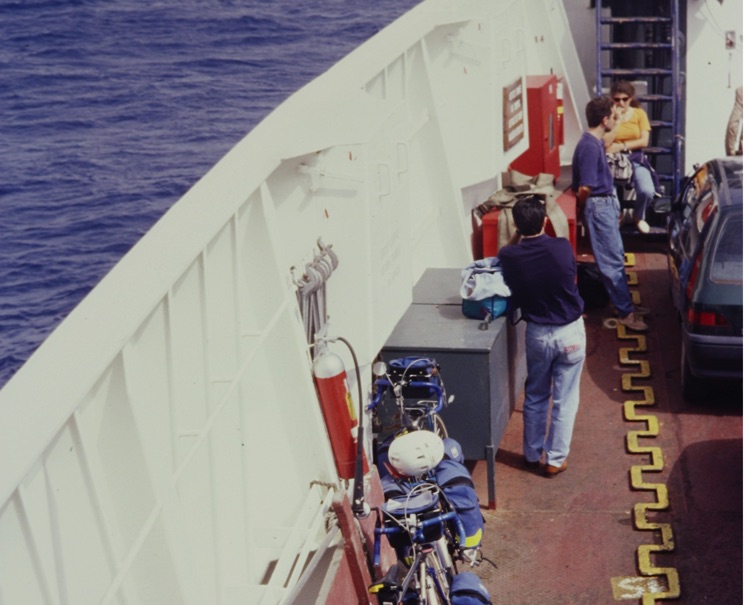
After reaching Brindisi 🇮🇹, we boarded the ferry to Patras 🇬🇷, embracing the first lights of the Ionian Sea. The overnight ferry journey of about 17 hours offered us a new rhythm: the gentle movement of the waves, the stars illuminating the night, and the salty air foreshadowing an encounter with a world yet to be discovered.
The ferry ride along the Ionian Sea became a journey suspended between sky and water, with the sea breeze caressing our faces and the salty scent accompanying every breath. Time seemed to stretch: the waves told stories of sailors and travelers from distant eras, while the sun played with the water’s reflection, creating ever-changing patterns of light.
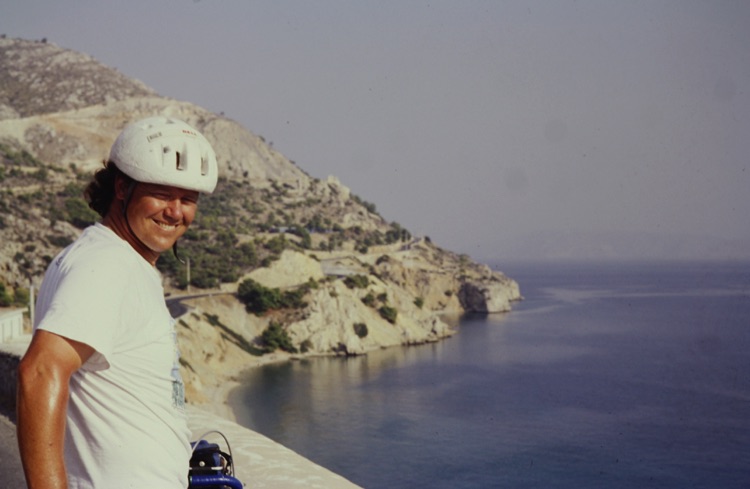
Landing in Patras 🇬🇷, we got back on our bicycles, ready to pedal through villages and landscapes still unknown. Following quiet roads northeast, we passed markets and small towns until reaching Xylokastro, a seaside village. Here, the intense sun, crystalline waters, and palm trees welcomed us, offering a taste of Greece’s Mediterranean soul.
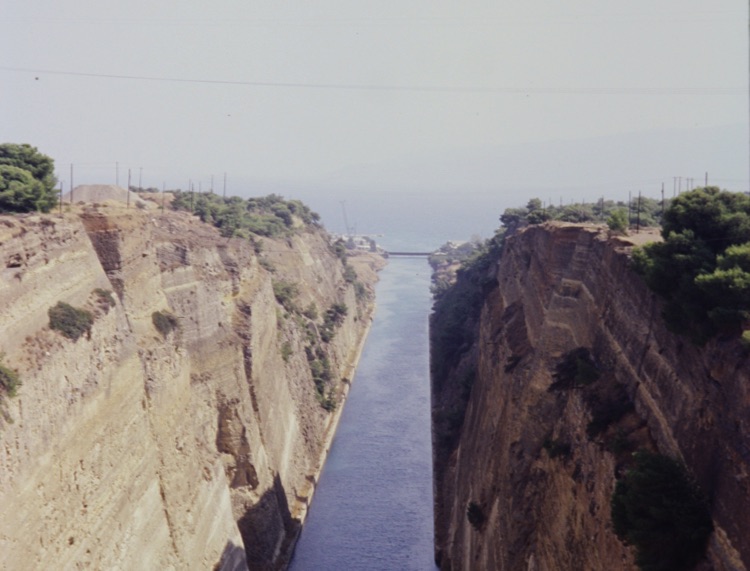
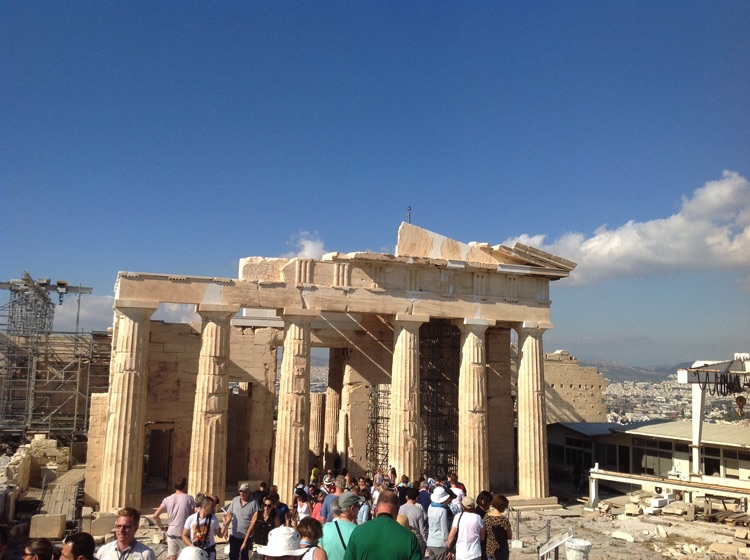
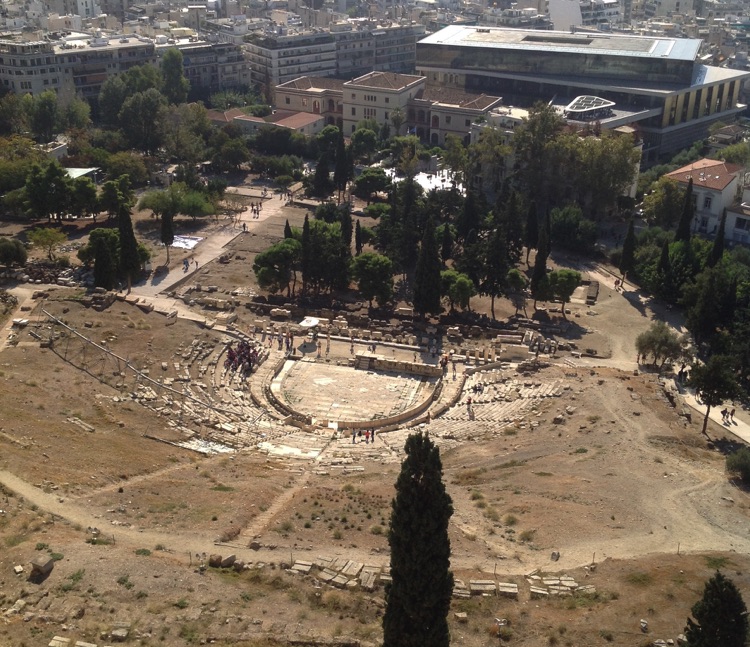
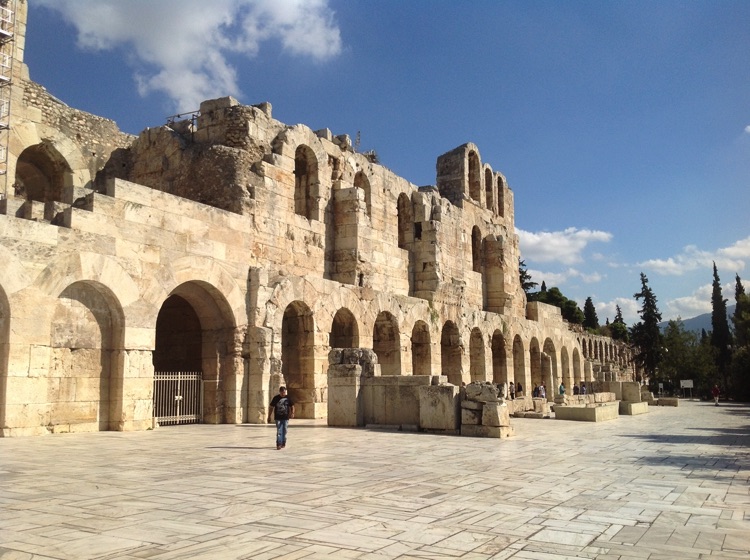
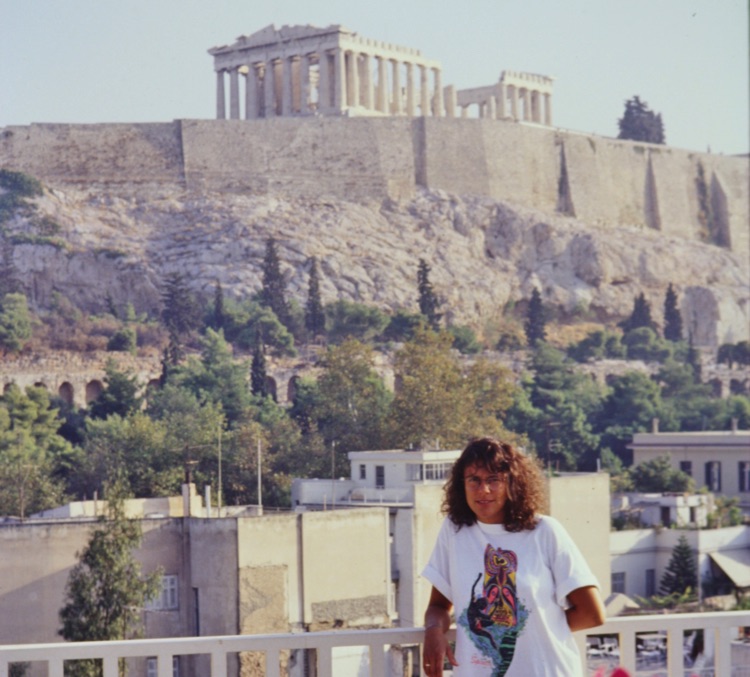
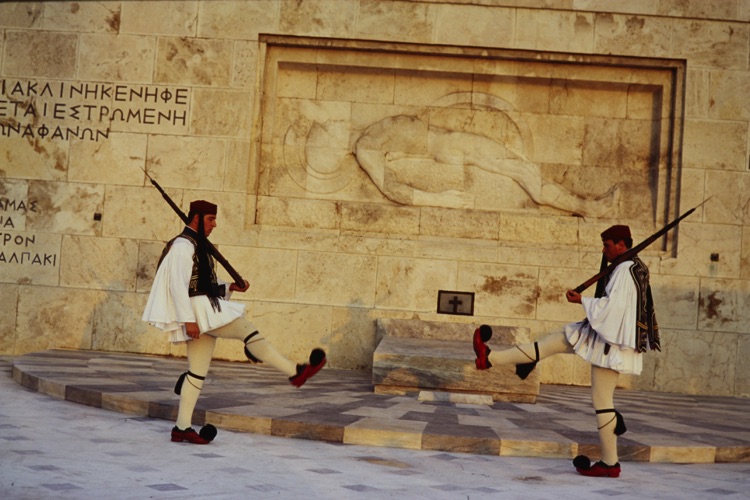
Continuing along the old national road toward Corinth, we admired suspended bridges over gorges and spectacular sea views, until arriving in Athens 🇬🇷. In the capital, we walked through alleys, historic squares, and iconic sites, exploring local markets and savoring traditional Greek cuisine.
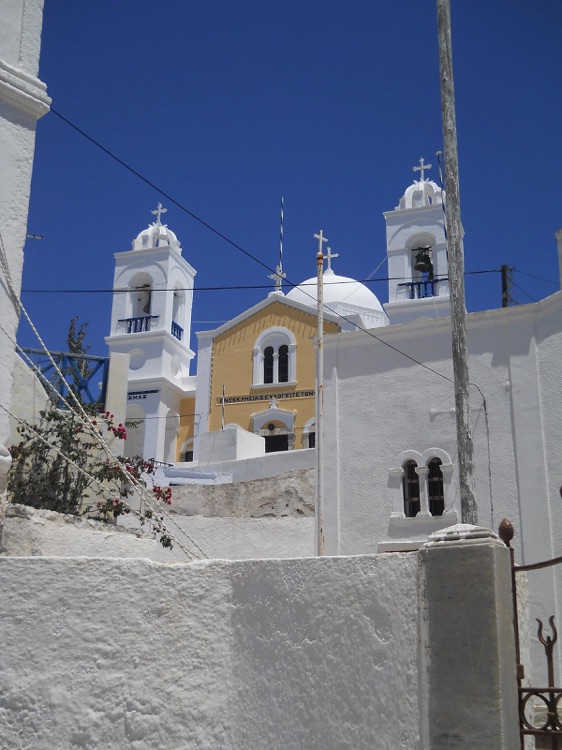
From the port of Piraeus 🇬🇷, the departure point for the Greek islands, we boarded the ferry ⛴️ to Paros 🇬🇷. The island captivated us with golden beaches, white alleys, and the scent of the sea, while a short stop in Parikia allowed us to soak in the Cycladic atmosphere.
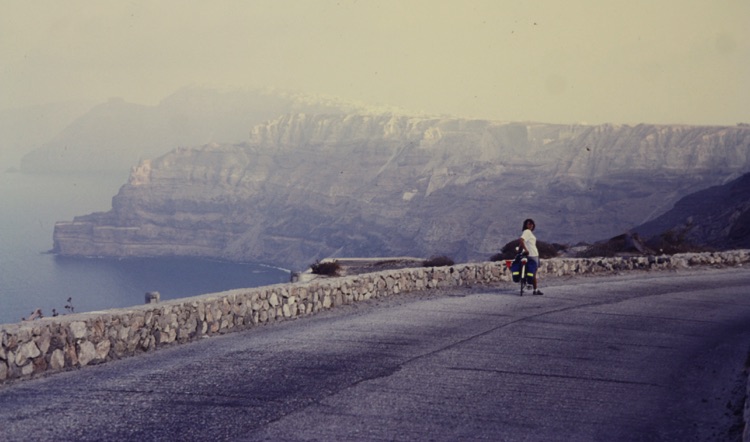
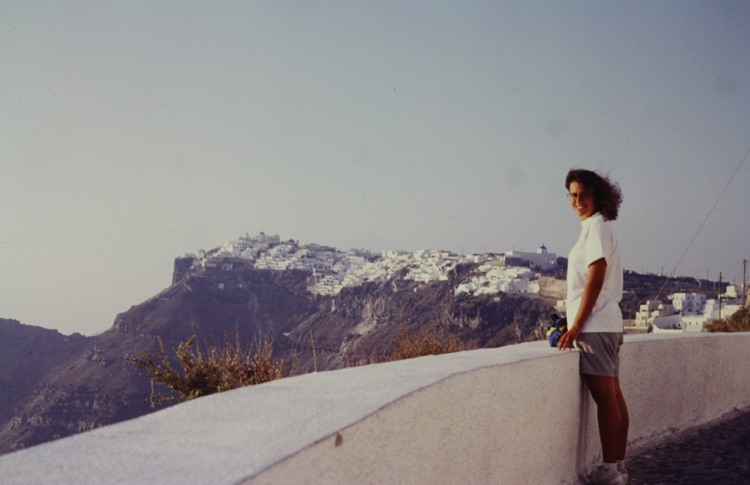
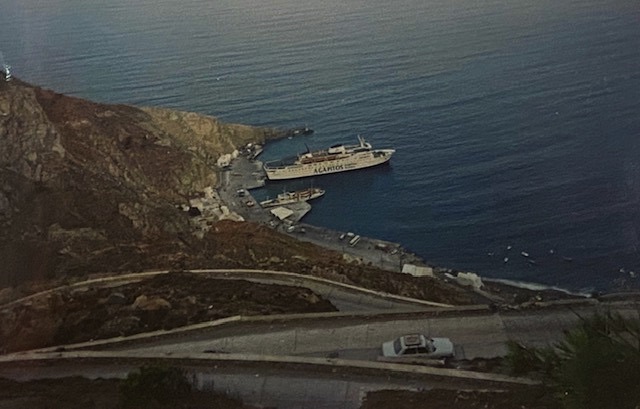
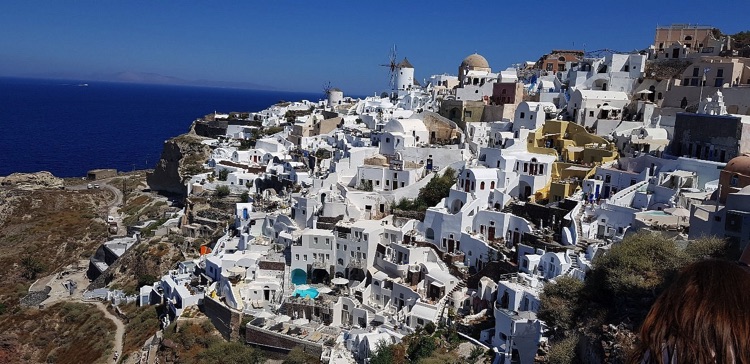
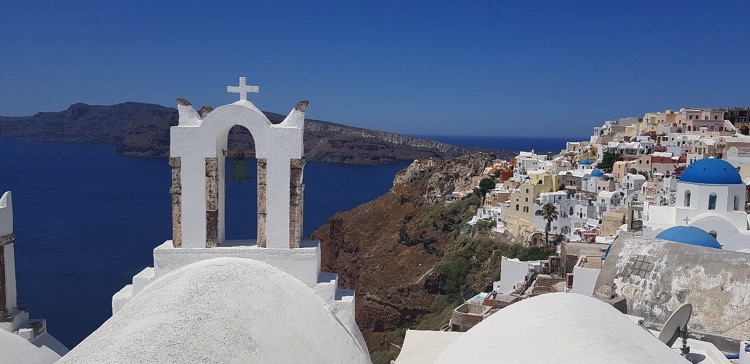
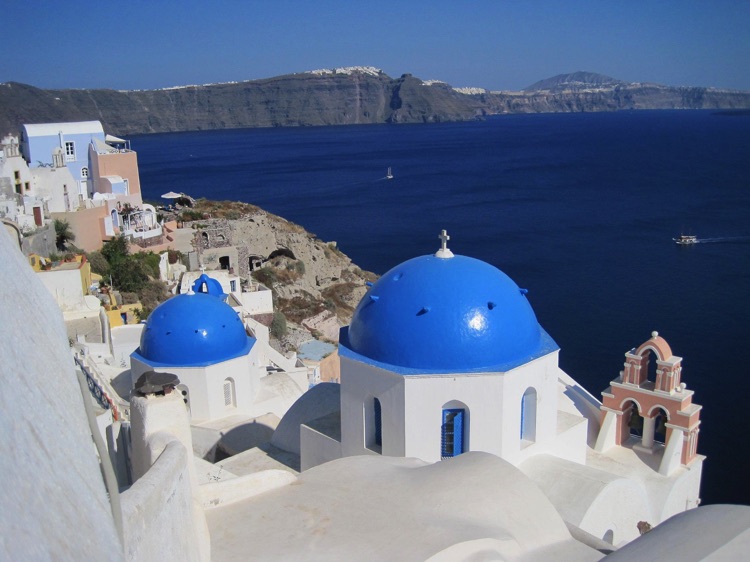
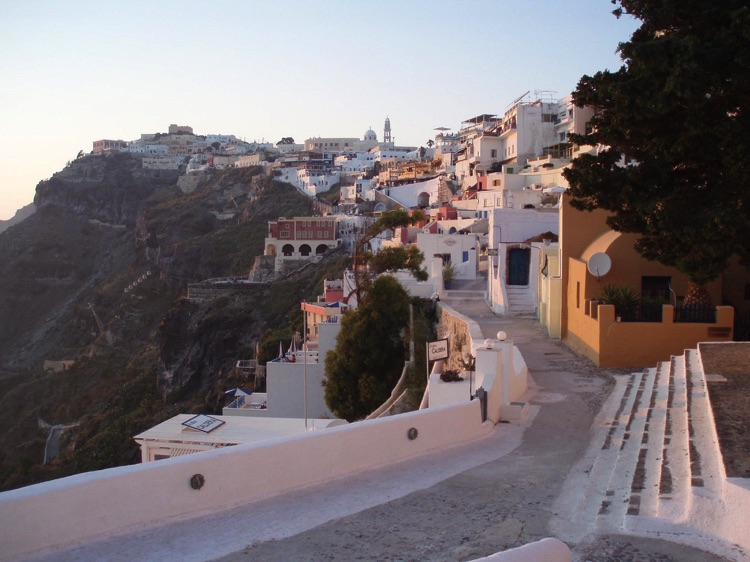
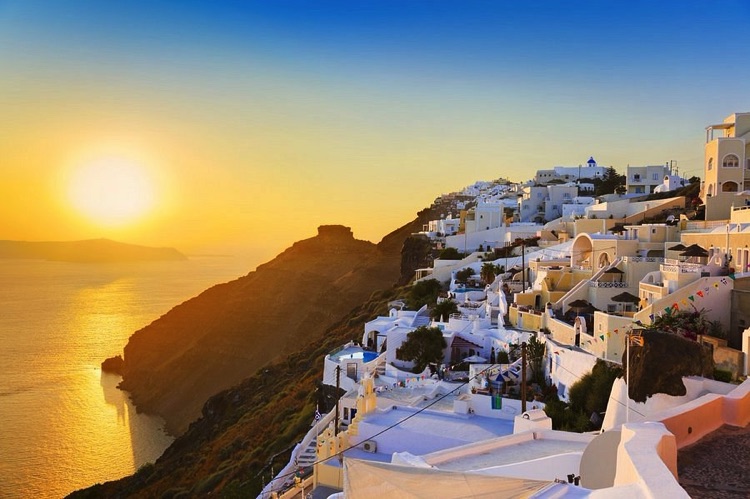
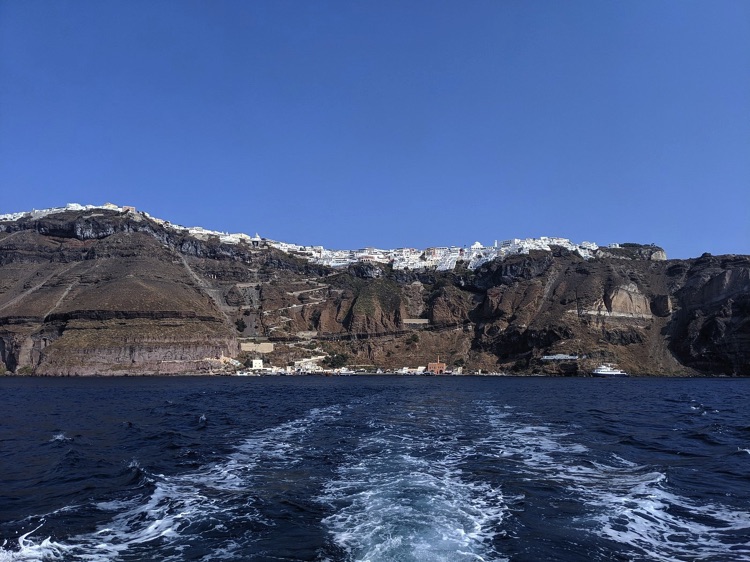
From Paros 🇬🇷, a two-hour ferry ⛴️ ride to Santorini 🇬🇷 brought us to the port of Athinios, from where a steep climb led to Fira, the island’s capital, perched between cliffs and deep blue sea. Every alley told a story: white houses with blue roofs, windmills, and vineyards.
The sunset in Santorini was spectacular, with the sun’s colors reflected on the sea and cliffs, transforming the landscape into a living painting of orange, pink, and deep blue.
Strolling through the Cycladic streets, savoring local dishes, and contemplating this breathtaking view made us forget all fatigue, despite the island being very touristy with high prices.
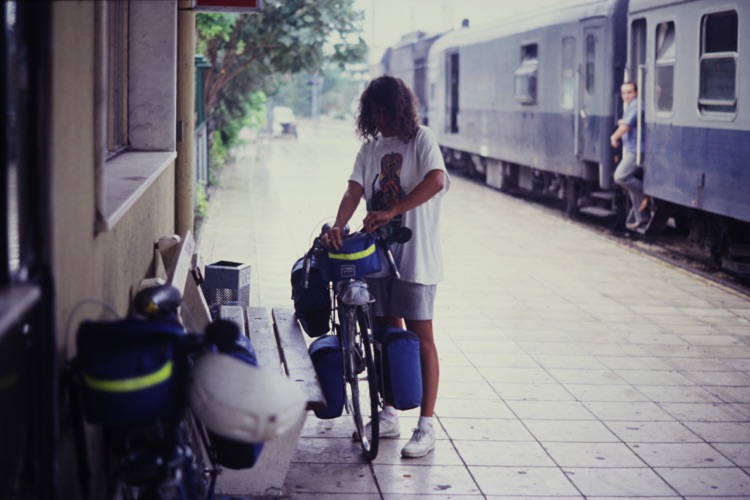
After visiting Santorini 🇬🇷, we boarded the ferry ⛴️ back to Piraeus 🇬🇷 and, with a long train journey to Patras, avoided retracing the route we had taken earlier, admiring the Greek landscapes once again from the window, while our bicycles rested in one of the dedicated carriages.
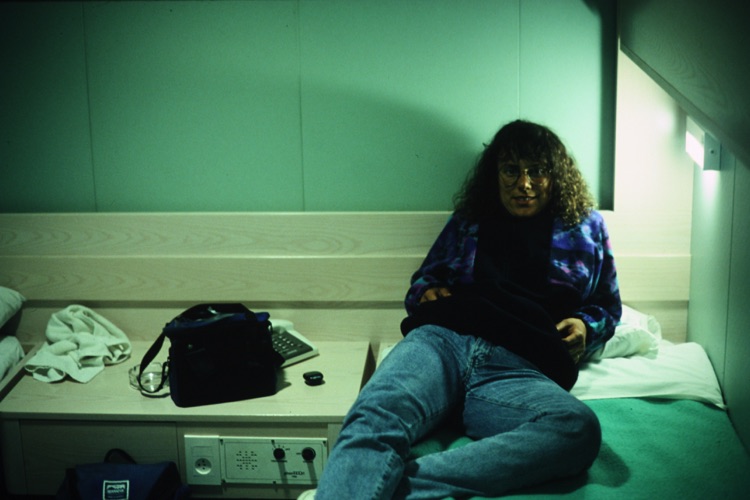
Finally, the ferry ⛴️ crossing to Trieste 🇮🇹, with a comfortable cabin, closed the Greek chapter of our journey, leaving us with indelible memories of sea, light, and Mediterranean culture.
Leaving Greece 🇬🇷: Returning Across the Adriatic and Northern Italy 🇮🇹
After saying goodbye to the Aegean Islands and savoring the magic of Santorini 🇬🇷, we boaded the ferry from Santorini (Athinios) to Athens (Piraeus) ⛴️. To avoid retracing our outward route, we crossed Greece by train 🚆 to Patras 🇬🇷.
Comfortably seated, with our bicycles secured in special carriages, we admired the Greek landscapes once again through the window: olive groves, mountains, and small villages passed by like scenes in a film, allowing us to relive the emotions of previous days without effort, noticing every detail calmly.
Arriving in Patras, we boarded the ferry to Trieste, in the Friuli-Venezia Giulia region 🇮🇹. After long hours at sea, covering over 1,035 km in more than 24 hours, we finally reached northern Italy.
From Trieste, we took our bicycles for the final leg of the journey: riding north through Monfalcone to Grado, whose historic center resembles a small Venice, with clean streets, the scent of the sea, and a serene atmosphere. After a short stop at Albergo Ambriabella, we set off at dawn, with the fresh sea breeze still in the air.
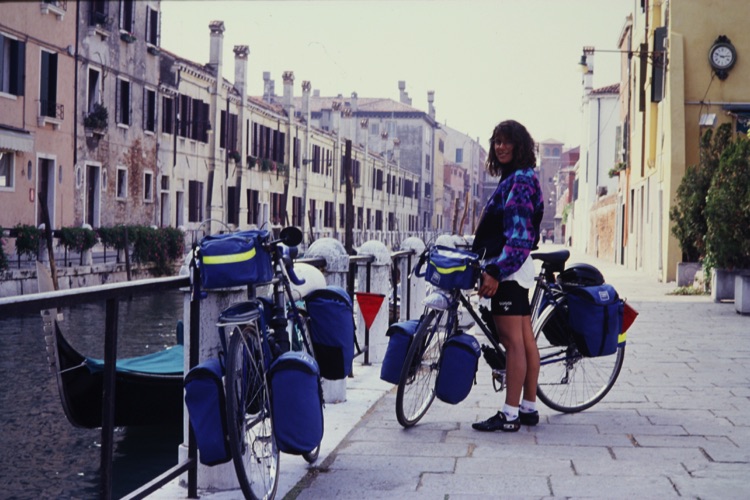
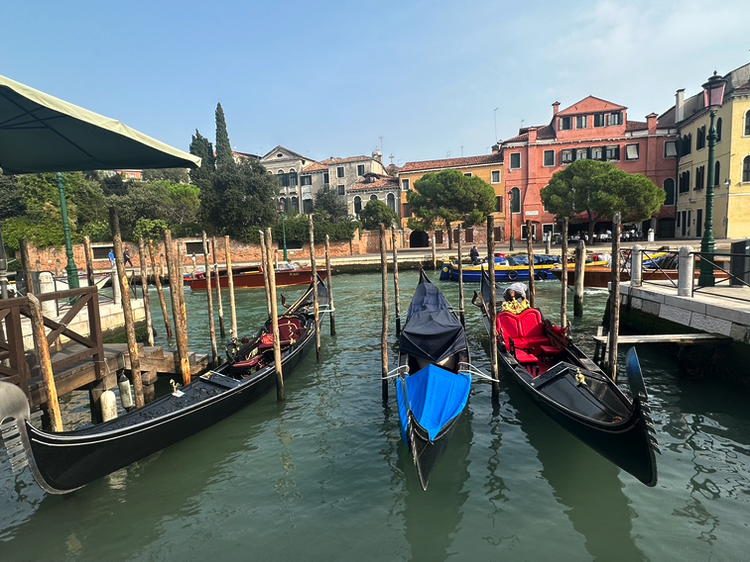
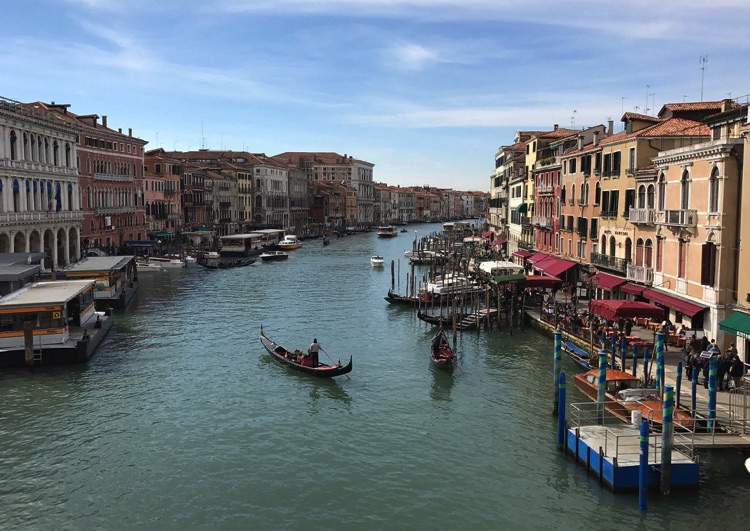
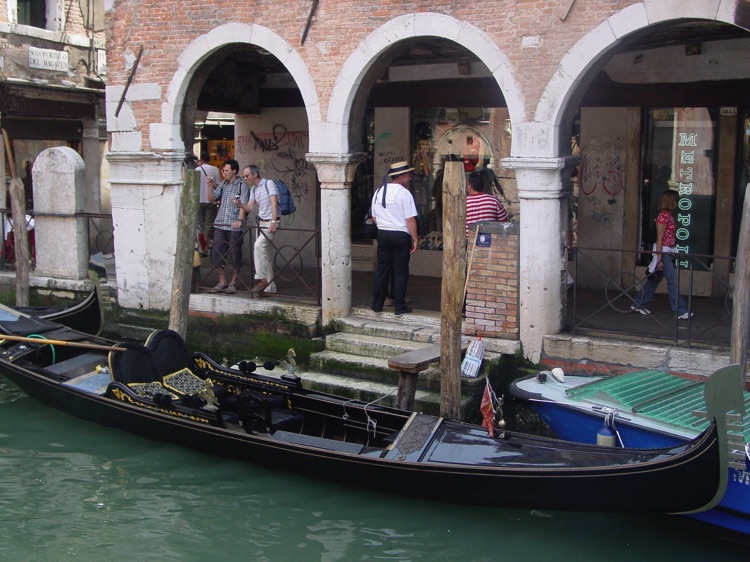
We continued along the coast, passing through Aquileia, with its ancient Roman ruins and majestic basilica, then Cervignano and San Donà di Piave, following the coastline toward Venice. Here we left our bicycles for a few hours, strolling through the calli and bridges, immersed in the reflections of the lagoon. Walking through St. Mark’s Squareand overlooking the Grand Canal was a magical pause, suspended between water and sky, before returning to the saddle.
From Venice, we pedaled north through small towns such as Zelarino, Maerne, Noale, San Donà, Messanzago, Camposampiero, San Giustina in Colle, Villa del Conte, San Giorgio in Bosco, Gazzo, Lanzé, and Vicenza, riding among fields and hills where the landscape changed with every turn.
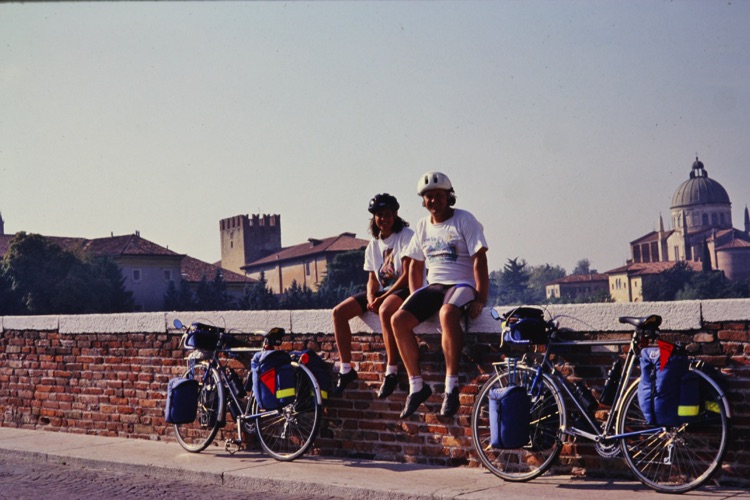
Following State Road 11 from Vicenza, we reached Verona, then along the shores of Lake Garda to Castelnuovo, Peschiera, and Sirmione, a small jewel suspended above the waters. The Scaliger Castle, completely surrounded by the lake, and the Grotte di Catullo reminded us of the grandeur of the past.
Continuing along the lake shore, we passed Desenzano, Lonato, Rezzato, Brescia, Ospitaletto, Coccaglio, Palazzolo sull’Oglio, Telgate, Bolgare, Bagnatica, and finally Seriate, before reaching Bergamo. Here, in the silent and evocative Upper Bergamo (Bergamo Alta), we concluded the day among ancient walls and breathtaking city views, resting at Hotel Il Gourmet, the last stop of a journey alternating quiet campsites and city stays.
The final stage brought us back to Milan, closing the circle of our long Mediterranean journey: approximately 2,640 kmthrough coasts, islands, and mountains, returning to the starting point, welcomed by our loved ones.
In the end, it’s not the kilometers traveled that remain, but the emotions: the morning light on the sea, the scent of wet earth, the smiles encountered along the way. The bicycle asks for nothing, only to turn and take us far.